
Factory Departments
Factory Departments
Advanced and Modern Production Facilities of Tolou Nourd Pars
Tolou Navard Pars utilizes advanced and modern production facilities to meet market demands and manufacture high-quality products. Continuous upgrades to factory equipment, combined with the expertise of a skilled and experienced team, enable the production of aluminum sheets and discs in compliance with international standards. Tolou Navard Pars is committed to delivering high-quality, reliable products while contributing to the country’s industrial self-sufficiency.
DC Casting Unit
DC Casting Unit
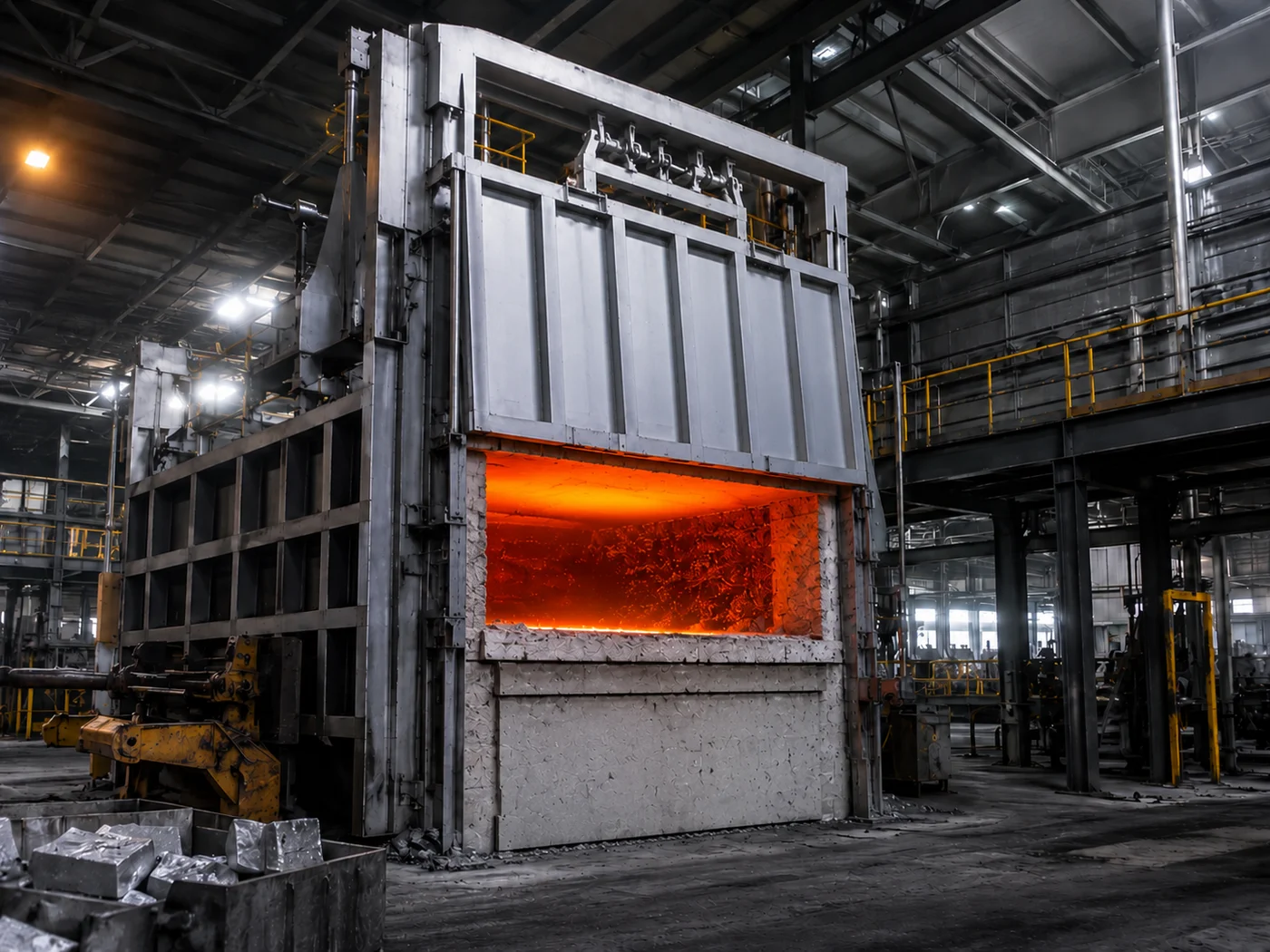
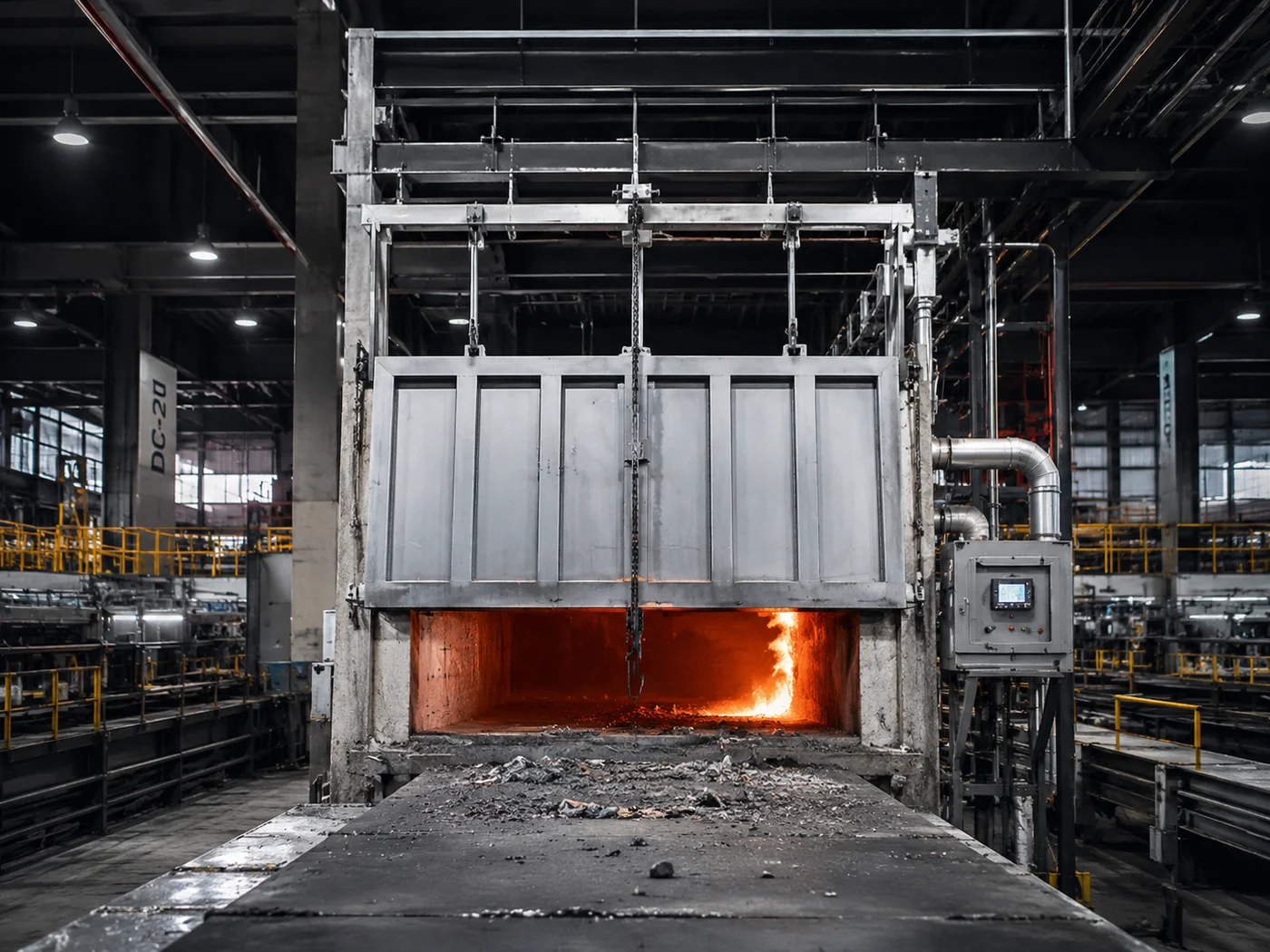
Various methods are used for aluminum casting, where precise control over the process, quality, and material structure is essential. Direct Chill (DC) Casting, also known as continuous casting, is one of the most widely used and efficient methods in aluminum production, providing greater control over the casting process. Recognizing its advantages, Tolou Navard Pars utilizes DC casting with advanced, fully equipped furnaces to achieve reliable and high-quality production.
In the DC casting process, raw materials—primarily 99.8% pure aluminum ingots at Tolou Navard Pars—are charged into the furnace and melted. Additional elements are then added according to the desired alloy composition. The molten material is ultimately cast into 4-meter-long aluminum slabs. Key advantages of this method include improved control over the solidification process, enhanced mechanical properties of the aluminum, and reduced casting defects.
Years of experience, combined with continuous advancements in technical expertise and production equipment, enable Tolou Navard Pars to produce 1050, 6061, and 8011 aluminum alloys on a daily basis. Today, these alloys are among the most widely used aluminum grades across global markets.
Slab Milling Unit (Gantry Milling Machine)
Slab Milling Unit (Gantry Milling Machine)
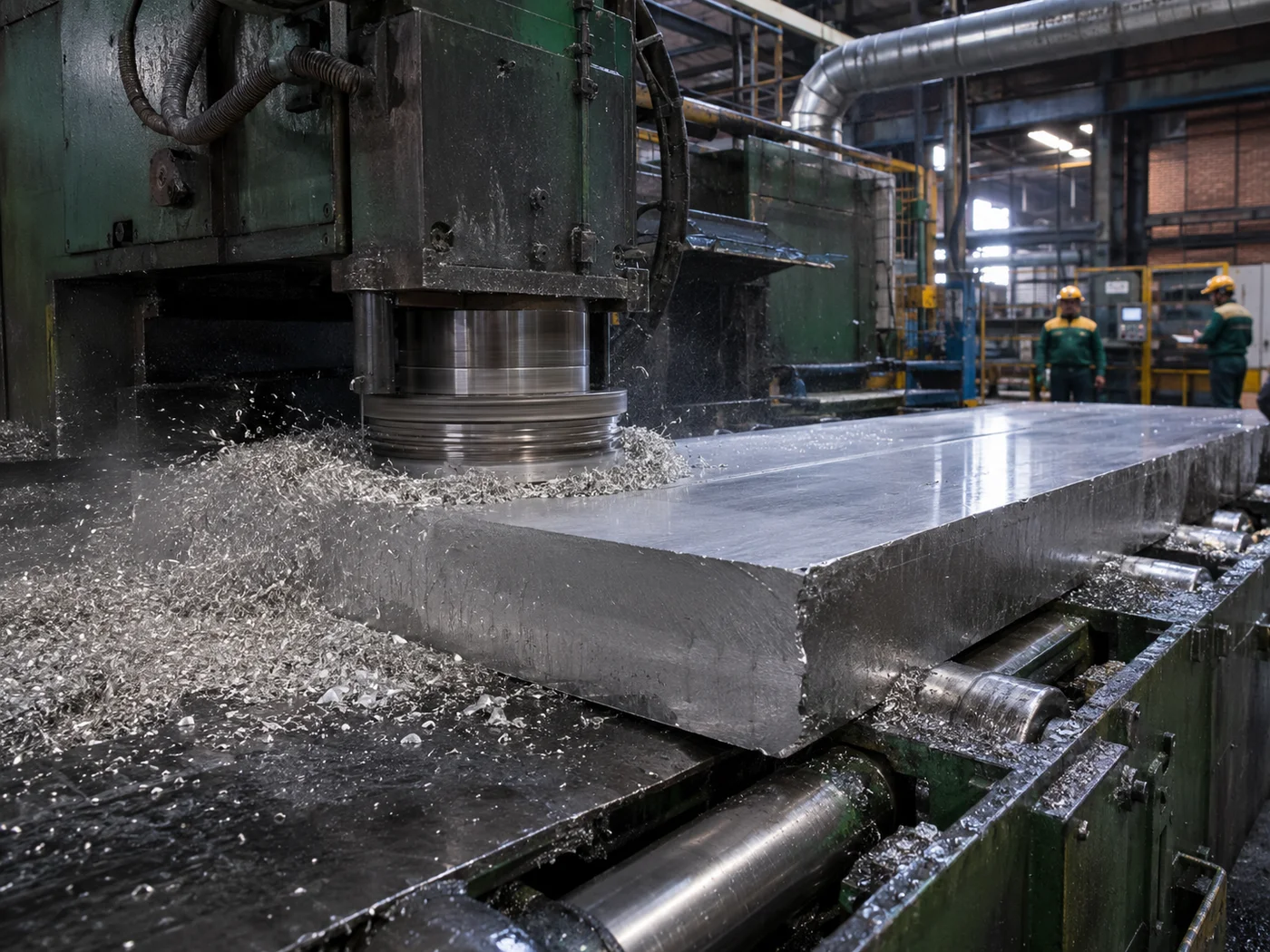
Slab scalping, or milling, is performed to remove excess material and surface irregularities from the metal. This process uses advanced, highly specialized machinery designed to deliver exceptional precision and surface quality. As a result, high-quality aluminum slabs are produced, enabling both standard and complex surface machining operations.
Since the quality of milling equipment directly affects the final quality of the slabs, modern and well-equipped machinery is essential. In addition, all slab processing operations must be carried out by skilled and experienced specialists.
All stages of material removal and slab production are carefully monitored by the company’s Quality Control Unit. To ensure the production of high-quality, standard-compliant slabs, each slab is inspected using specialized laboratory equipment. Once the required quality standards are confirmed, the slabs are transferred to the preheating furnace for the next stage of production.
Preheating Furnace
Preheating Furnace
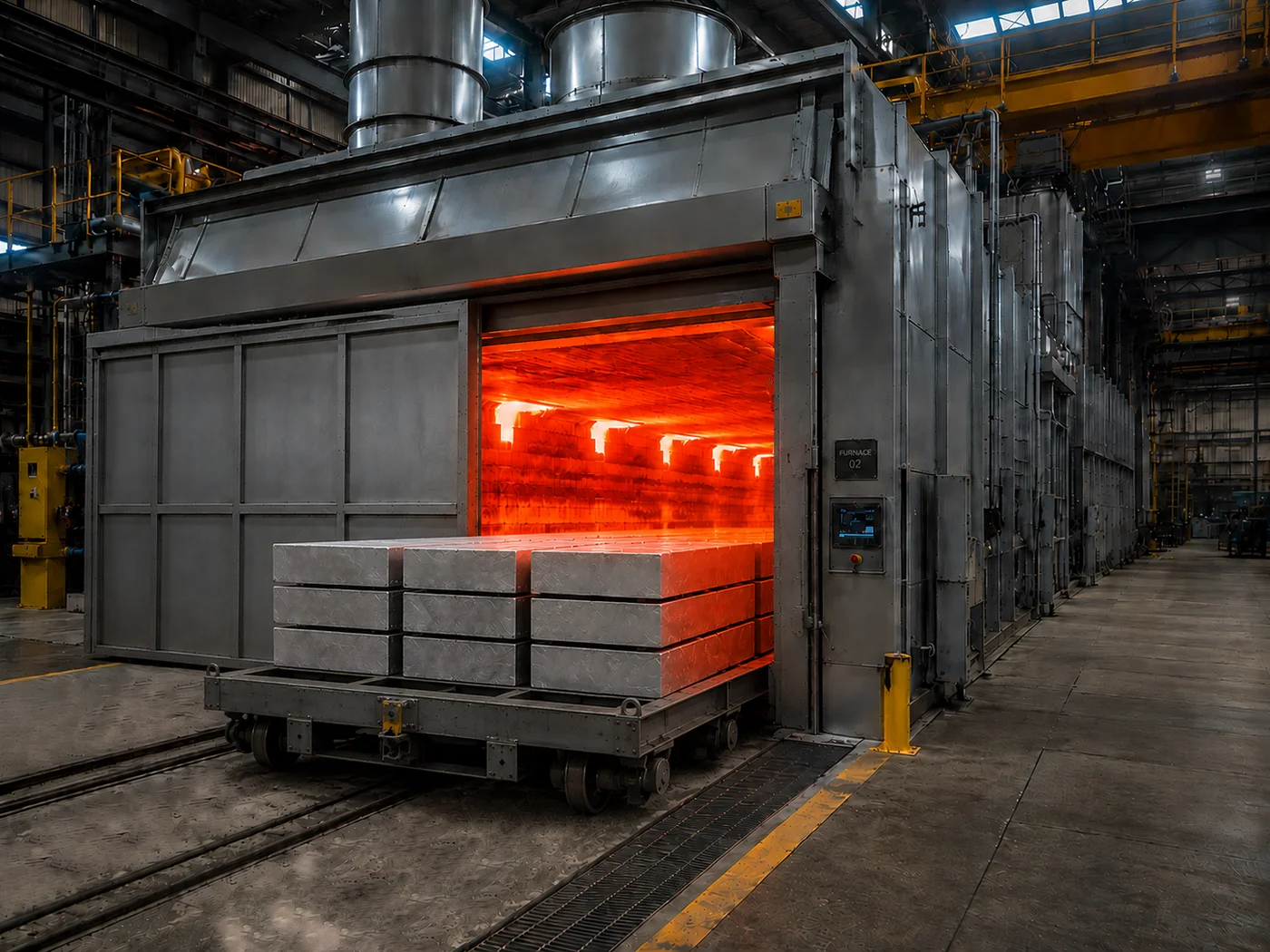
The preheating furnace (Preheat Rolling Furnace) is one of the key pieces of industrial equipment used in the aluminum industry. It is designed to heat various metal sections with different dimensions and thicknesses. In the production of aluminum sheets and discs, preheating furnaces are used to facilitate the rolling process and improve its accuracy. These furnaces typically feature a rectangular chamber designed to ensure uniform heat distribution throughout the material.
Using a preheating furnace during the rolling process helps reduce tensile stress in the aluminum, preventing cracking and surface flaking. Therefore, modern and advanced furnaces are essential for maintaining the quality of aluminum slabs. After specific thermal conditions are set, the previously produced slabs are placed in the furnace and heated to prepare them for the rolling process.
Rolling Mill
Rolling Mill
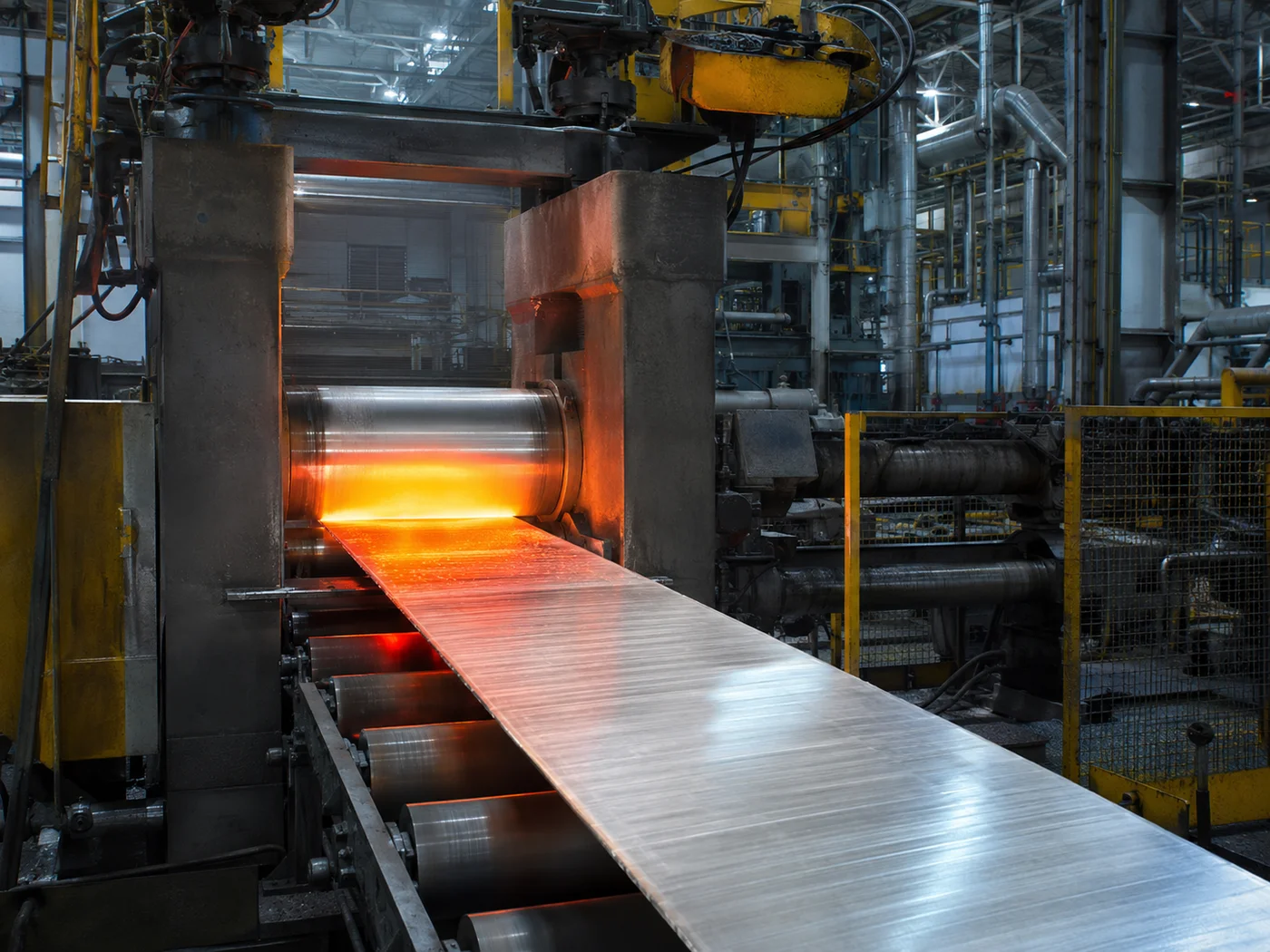
Rolling is one of the most critical stages in the production of aluminum sheets and discs. During this mechanical process, the thickness of the aluminum is reduced while the material is shaped to the required dimensions. The slabs are passed through two or more rollers until the desired thickness and form are achieved. In addition to modifying the shape and thickness of the aluminum, the rolling process also helps improve its physical properties.
Rolling is carried out using two main methods: hot rolling and cold rolling. In hot rolling, the aluminum is processed at a temperature above its recrystallization temperature. This elevated temperature increases the material’s formability and flexibility while helping prevent cracking. Hot rolling also enables the production of aluminum sheets with reduced thickness.
In cold rolling, the process is typically carried out at room temperature and below the recrystallization temperature of aluminum. This stage generally follows hot rolling and is used to achieve thinner gauges and greater dimensional accuracy. Cold rolling plays an important role in maintaining uniform sheet thickness and precise dimensional control, while also improving the material’s properties by increasing the strength and hardness of the aluminum.
Modern and advanced equipment is used in the rolling of aluminum slabs, enabling the production of high-quality aluminum sheets in a wide range of dimensions and thicknesses. This versatility makes aluminum sheets suitable for applications across various industries. With nine modern cold rolling machines, Tolou Navard Pars has the capacity to manufacture a wide range of aluminum sheets and discs in high production volumes.
Pressing Unit
Pressing Unit
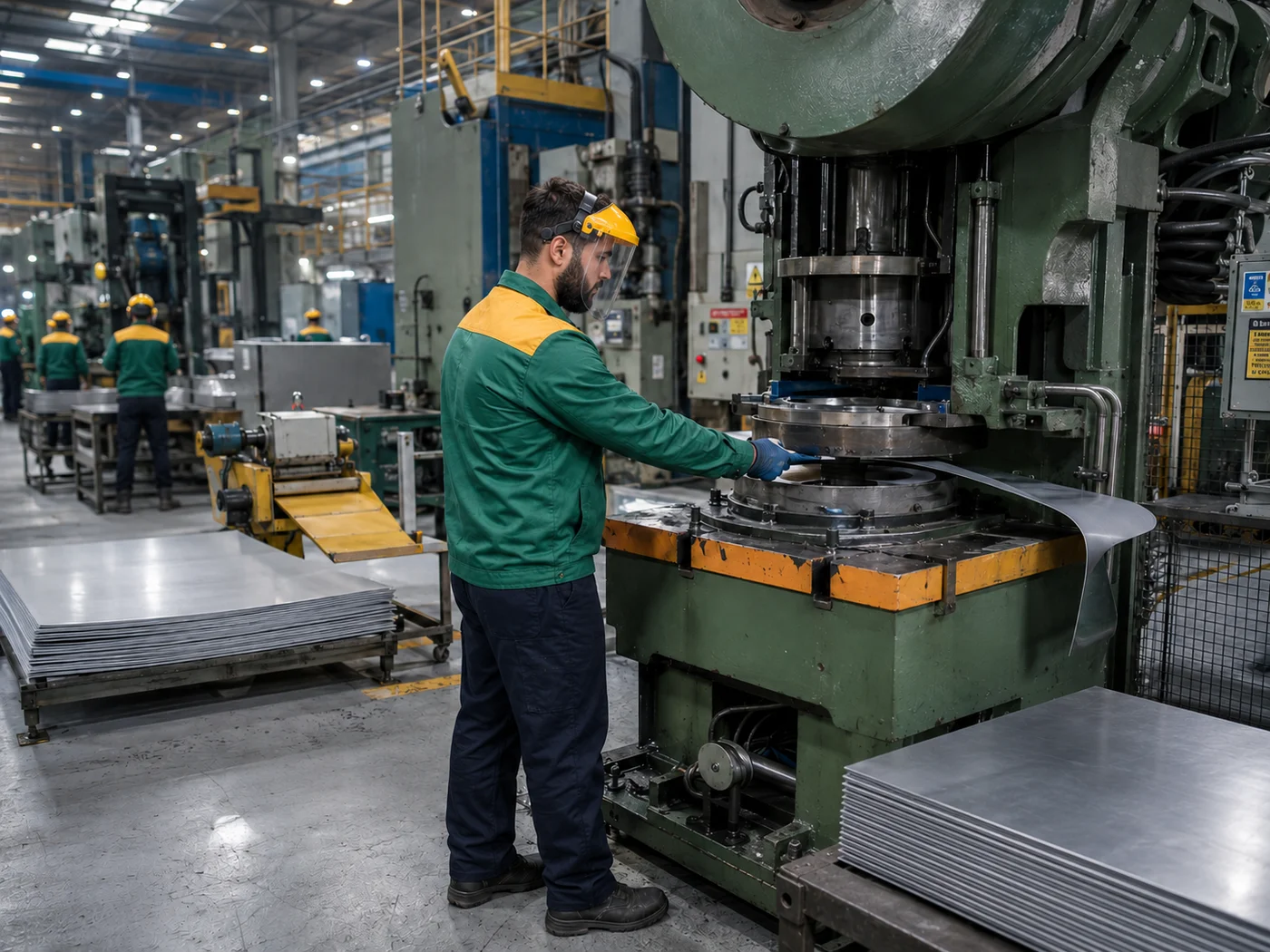
Pressing is a metal-forming process that uses high pressure and force to shape the material. This technique has long been used in the metal and aluminum industries and is still widely applied today through both manual and automated pressing methods. After the rolling process, aluminum sheets are transferred to the pressing section to produce aluminum discs.
The pressing process is carried out using eight modern and advanced machines, with a combined production capacity of up to 16,000 tons of aluminum discs per day. These highly sophisticated machines allow precise control over both operating speed and accuracy, contributing significantly to the high quality and consistency of our aluminum discs.
Annealing Unit
Annealing Unit
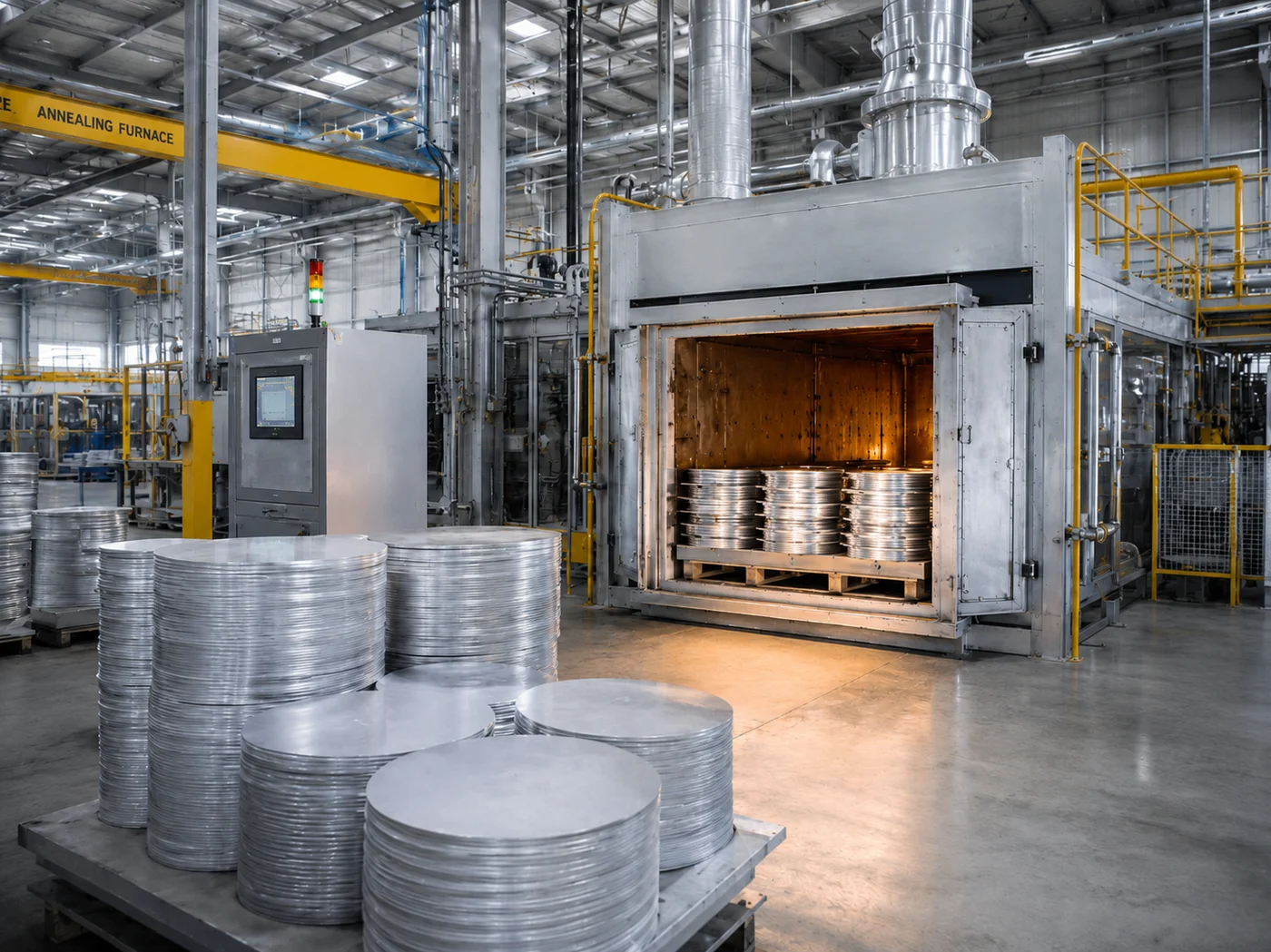
Annealing is a heat treatment process that reduces the hardness of a metal while increasing its ductility and flexibility. In aluminum, annealing modifies the material’s microstructure as well as its mechanical and physical properties, improving formability and helping to reduce brittleness during subsequent processing.
Please note that the annealing process and the proper placement of aluminum discs inside the furnace require precise control and must be carried out according to established procedures. Before annealing, the discs are carefully loaded into the furnace, where rapid and controlled temperature adjustment is one of the key features of the annealing system. After the annealing process, the discs are removed and cooled, then inspected by the Quality Control Unit before being transferred to the packaging section.
Quality Control Unit
Quality Control Unit
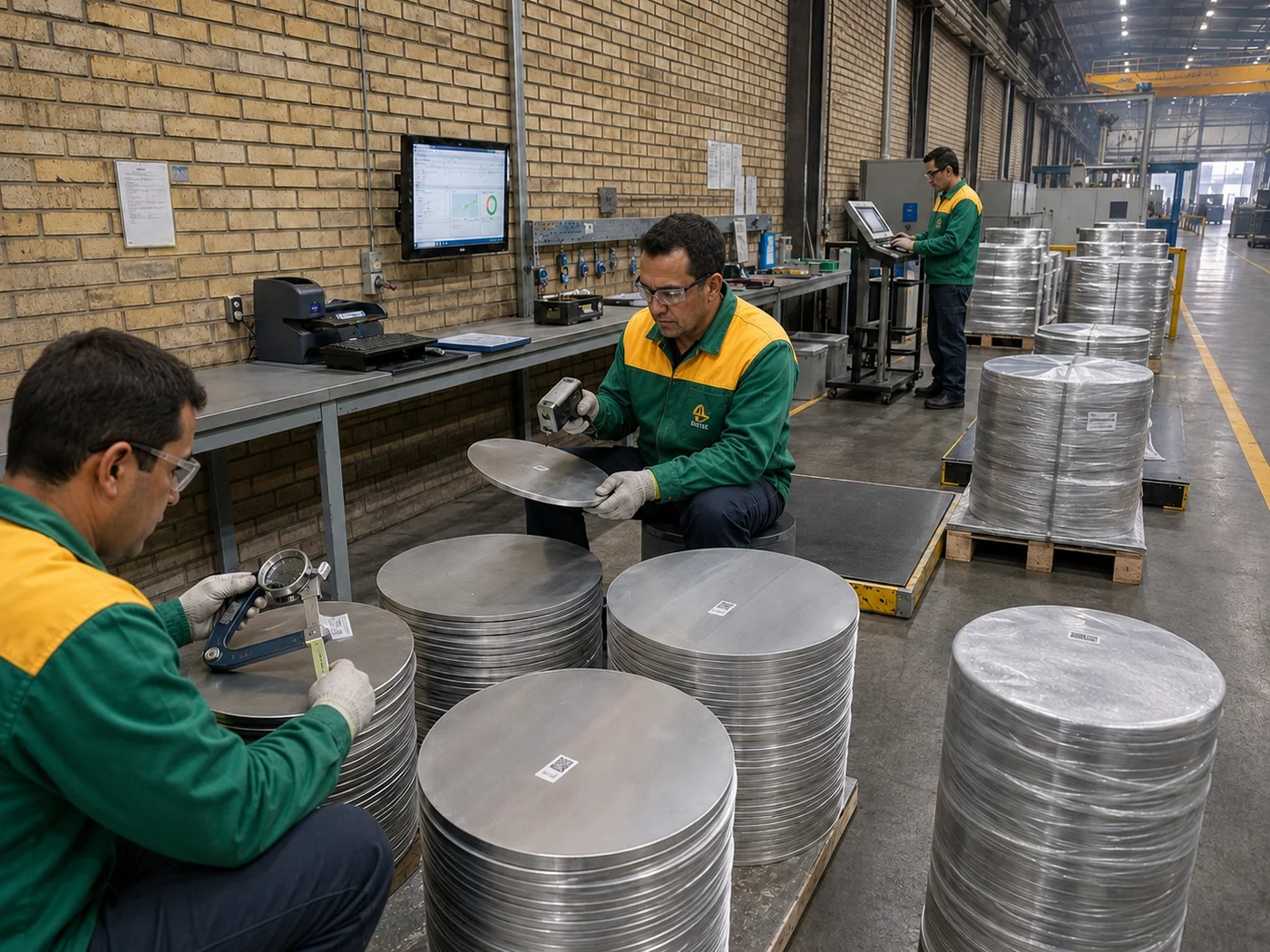
Quality control and the continuous improvement of product quality are among the key priorities of Tolou Navard Pars. For this reason, every stage of aluminum sheet and disc production is closely monitored by the company’s engineering team. With the expertise and extensive experience of the Engineering and Quality Control teams, all products are carefully inspected, and any defective items are promptly removed from the production process.
At Tolou Navard Pars, we use a quantometer to analyze the chemical composition of alloys and their constituent elements, ensuring that product quality is carefully evaluated before delivery. Building customer trust and achieving customer satisfaction are among our highest priorities. Therefore, we are committed to delivering all products with high quality standards and reliable packaging.
Factory Units Gallery
Infrastructure
Production Infrastructure at Tolou Nourd Pars
The company’s production units, supported by modern equipment and skilled personnel, play a key role in the production of aluminum sheets and billets. This production infrastructure enables better process control and the supply of products tailored to the needs of various industries.
DC Casting Unit
Production of Aluminum Slabs with Controlled Melting and Casting Processes
Equipped with Hot and Cold Rolling Facilities
Cold Rolling Lines with the Capacity to Produce Sheets in Various Thicknesses
Metallurgical Laboratory and Optical Emission Spectrometer
Control of Alloy Chemical Composition and Evaluation of Product Specifications
Production of Aluminum Sheets and Billets
Available in Various Alloys and Dimensions to Meet the Needs of Different Industries
Factory Output
Production Unit Output
The output of the company’s production lines includes aluminum sheets and discs in a wide range of alloys, dimensions, and thicknesses.
Product specifications are determined based on the alloy type, production process, and specific order requirements.
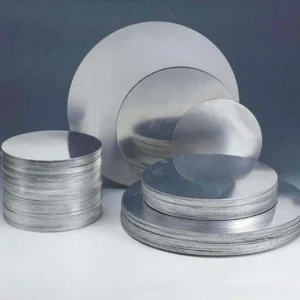
Aluminum Discs
Production of aluminum discs in various alloys and diameters for a wide range of industrial applications.
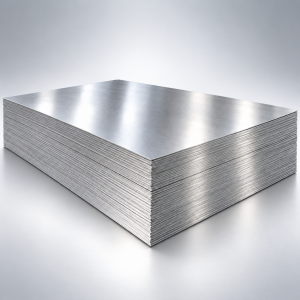
Aluminum Sheets
Production of aluminum sheets in various alloys, thicknesses, and dimensions to meet the specific requirements of different industries.