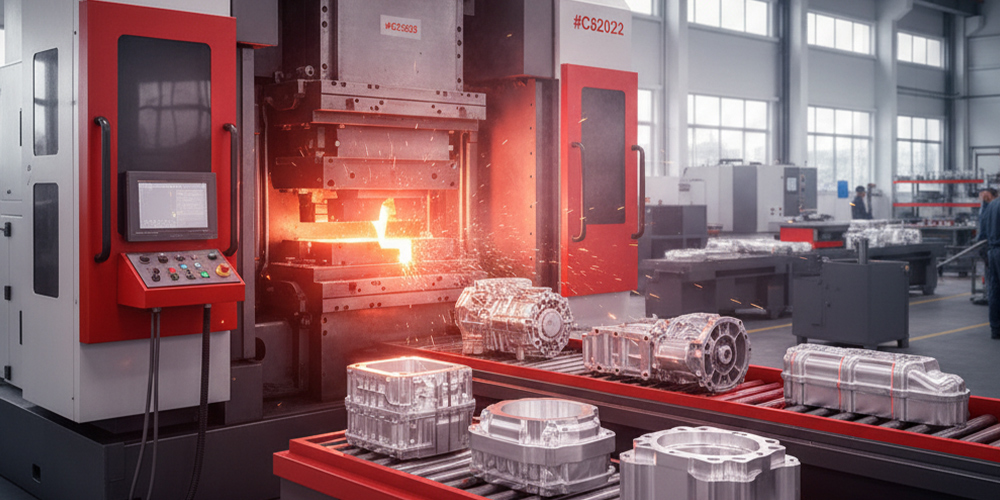
The metals market, including aluminum, is constantly influenced by multiple factors, and various variables can lead to price fluctuations. The impact of sanctions on Iran’s aluminum ingot market is considered one of the key factors and can be regarded as one of the most significant elements affecting this sector.
Aluminum is an important and even strategic metal used in various industries such as construction, automotive manufacturing, heavy industry, and more. While many people attribute aluminum price fluctuations to sanctions, others believe that the role of economic actors and media influence should not be overlooked.
The exchange rate and sanctions are among the key indicators that are always closely monitored, as fluctuations in currency value directly affect the costs of exporting and importing this metal. A precise evaluation of aluminum ingot pricing and sanctions reveals a close and direct relationship between these two factors.
In this article from Tolou Nourd Pars Industrial Group, we examine the impact of sanctions on Iran’s aluminum ingot market.
 Effects of sanctions on aluminum supply and demand
Generally, in normal conditions, the aluminum ingot market in Iran has a high potential to meet domestic demand as well as export needs to foreign markets. However, a very serious issue in this regard is international sanctions, which have created various restrictions and challenges in the supply and demand chain of Iran’s aluminum ingots.
The impact of sanctions on the Iranian aluminum ingot market can be examined from several perspectives.
Restrictions on the import of technology, know-how, equipment, and raw materials have led to reduced access and, in some cases, have imposed significant costs on Iran’s aluminum industry. In addition, numerous and serious limitations in the supply and demand process are among the other challenges that restrict Iran’s access to global markets.
Position of Aluminum Ingots in Iran’s Industry and Economy
One of the most important metals in the industry of different countries is aluminum, which can be considered a strategic metal due to its high significance. Aluminum ingot is one of the key metals and the primary raw material for many basic and heavy industries.
Aluminum is used to produce strong and lightweight components in industries such as construction, automotive, electrical, aerospace, shipbuilding, and more. The dependence of Iran’s industry on aluminum, combined with various sanctions, has led to multiple challenges in the Iranian aluminum market.
The impact of sanctions on Iran’s aluminum ingot market can be examined from two different perspectives.
First, increased production costs due to issues in importing equipment and raw materials. Second, export restrictions that limit Iran’s access to international markets. However, incorrect policymaking and weak management cannot be ignored, as together they create significant challenges for this industry.
The impact of exchange rates and sanctions on ingot prices
Analyzing sanctions and international restrictions alongside the exchange rate is one of the key topics in evaluating the aluminum market, as these two factors directly influence each other and must be assessed simultaneously.
In recent years, it has become clear that one dimension of the impact of sanctions on Iran’s aluminum ingot market is the increase in exchange rates, which leads to higher production costs and a higher final price of aluminum ingots. This trend creates challenges from multiple aspects, including increased costs of importing raw materials, equipment, and required technology, as well as difficulties in international financial transactions.
In addition, the increase in the exchange rate encourages producers to export their products for higher profitability. This trend reduces the supply of aluminum ingots in the domestic market, leading to higher prices. The problems caused by the impact of exchange rates and sanctions on ingot prices, along with reduced domestic supply, create various challenges for both small and large industries.
The result of such issues and the impact of sanctions on Iran’s aluminum ingot market include reduced production, suspension of activities, or an increase in the final price of products in various industries. In any case, all of these factors lead to significant economic losses for all consumers. Given these challenges, exchange rate fluctuations and sanctions should be considered as an important variable in economic policymaking.
Read more: What is the impact of rising aluminum prices on industry (automotive and construction)?
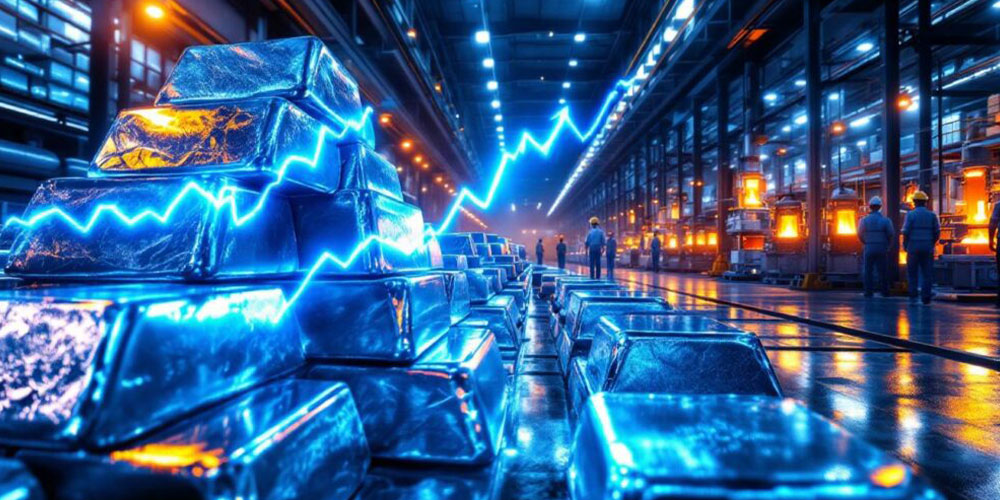
The impact of exchange rates and sanctions on ingot prices
One of the most important economic indicators affecting all markets, including the aluminum market, is the exchange rate. The depreciation of the rial leads to an increase in the cost of domestic production, and as a result, exporters are encouraged to sell their products in foreign markets instead of meeting domestic demand.
The shortage of aluminum ingots in the domestic market, as a result of the impact of sanctions on Iran’s aluminum ingot market, leads to higher raw material and final product prices, placing additional pressure on consumers.
The impact of exchange rates and sanctions on ingot prices are two interconnected factors and cannot be separated from each other. The imposition of sanctions leads to increased banking and export restrictions, ultimately resulting in higher prices in the domestic market. All of these issues together create a complex and challenging economic cycle.
The impact of sanctions on Iran’s aluminum ingot market
For industry players in aluminum and aluminum ingot markets, the impact of sanctions on Iran’s aluminum ingot market is highly critical and sensitive. Export restrictions are the first and most noticeable factor that reduces domestic producers’ access to international markets. This limitation leads to a reduced base of foreign customers and, consequently, a decrease in foreign currency revenue.
As a result of these challenges, a significant portion of production capacity in the aluminum market remains underutilized.
In addition, the process of importing raw materials, equipment, and other necessary inputs—discussed in previous sections—is another challenge related to the impact of sanctions on Iran’s aluminum ingot market. Such structural and operational problems also create psychological effects in the market and fuel rumors about price increases and the impact of sanctions on the aluminum ingot market.
Given the above, sanctions and their effects on the aluminum ingot market are not limited only to domestic shortages, international restrictions, and rising costs of raw materials and final products; they also impose significant psychological pressure on society.
The impact of sanctions on Iran’s aluminum ingot market: reality or exaggeration?
In Iran’s aluminum ingot market, one of the most important issues is distinguishing between actual market realities, sanctions, and exaggerated perceptions of problems. According to some reports, despite external sanctions, aluminum ingot production in Iran has shown an increasing trend, and aluminum-related industries have been able to adapt to these conditions.
However, a very important point remains: the impact of sanctions on Iran’s aluminum ingot market cannot be completely ignored, and it should be noted that aluminum ingot prices and sanctions have a two-way relationship.
Unfortunately, some media outlets and stakeholders of sanctions exacerbate these effects through psychological manipulation, leading to further problems in this area, including the impact of exchange rates and sanctions on ingot prices.
Overall, it should be said that despite the significant impact of sanctions on Iran’s aluminum market, weak domestic management and policymaking, along with media exaggeration, create a complex economic situation in the market.
Aluminum ingot prices and sanctions
Based on what has been discussed so far, aluminum ingot prices and sanctions have a direct relationship, and international restrictions affect the value of this metal in domestic markets. As sanctions and export limitations increase, producers try to compensate for their losses by raising prices in the domestic market.
This gradual and burdensome process imposes high costs on related industries, ultimately harming both them and end consumers. The impact of sanctions on Iran’s aluminum ingot market, as well as on other industries and goods, creates very difficult economic conditions across all dimensions.
In addition, fluctuations caused by sanctions and exchange rate changes lead to a sharp increase in market prices, and small and medium-sized industries face problems such as restrictions or even shutdowns.
This negative trend not only harms aluminum-related industries and other sectors but also weakens Iran’s aluminum industry in international markets.
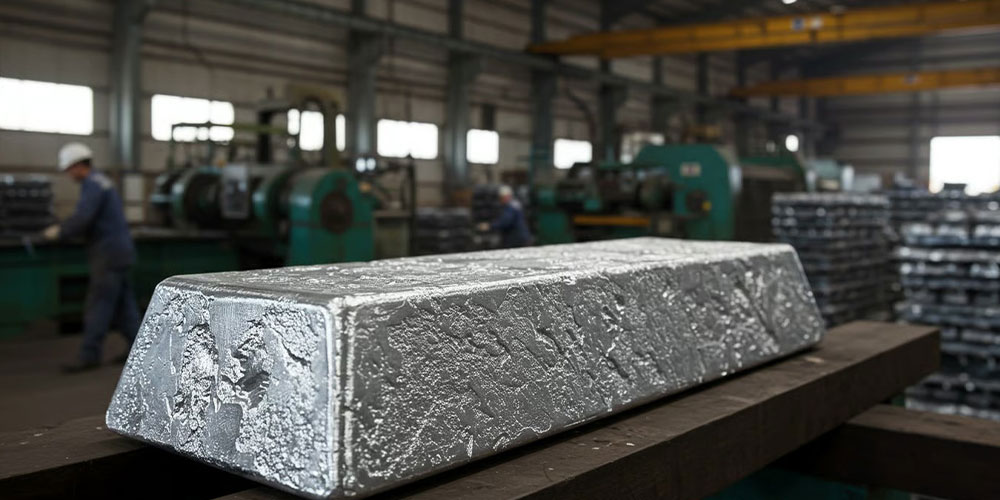
The future of Iran’s aluminum ingot market
Considering the current situation in Iran, international sanctions, and the lack of effective efforts to lift them, it is not possible to predict a bright future for the Iranian market in various sectors, including aluminum ingots.
Given the existing conditions and the impact of sanctions on Iran’s aluminum ingot market, the continuation of sanctions and their pressure essentially means the continuation of the current situation. To mitigate and reduce the effects of sanctions, reforming policies, managing the currency market, and increasing market transparency can help to some extent reduce their impact.
Based on evaluations and accumulated experience, with smart and precise management, the impact of exchange rates and sanctions on ingot prices can be relatively reduced, and a positive step can be taken toward revitalizing the domestic industry.
Conclusion
A review of the Iranian market in recent years clearly shows the impact of sanctions on Iran’s aluminum ingot market, which cannot be denied under any circumstances. Alongside restrictions caused by sanctions, exchange rate fluctuations are another factor affecting production trends, exports, and the negative growth of domestic markets.
The existence of sanctions not only limits access to global markets but also increases raw material prices, production costs, and the expenses of importing technology and raw materials.
A review of the impact of exchange rates and sanctions on ingot prices shows that two factors—domestic policymaking and management, along with currency fluctuations—directly influence the intensity and range of price changes.
In addition, the behavior of media and stakeholders benefiting from sanctions creates an additional psychological pressure, affecting the relationship between aluminum ingot prices and sanctions. Although the impact of sanctions on Iran’s aluminum ingot market cannot be ignored, their effects can be partially mitigated through transparency and the implementation of precise policymaking and market management.
Toloo Nourd Pars is an active producer of various aluminum sheets and billets and, with nearly 5 decades of experience, has become one of the leading manufacturers in this field. Competitive pricing, high product quality, and efforts to balance prices are some of the company’s strategies. For more information about purchasing products or contacting the company’s experts, you can use the “Contact Us” section.