Aluminum annealing is a heat treatment process used to restore the microstructure and mechanical properties of aluminum sheets. In many industrial applications, aluminum annealing plays a key role in improving aluminum formability through annealing, ensuring a uniform microstructure, and relieving internal stresses. As a result, the effect of annealing on aluminum sheet properties has a direct and decisive impact on the final product quality. The primary purpose of annealing aluminum is to optimize its properties for subsequent rolling, stamping, or forming operations. For this reason, manufacturers and buyers of aluminum sheets carefully control the annealing parameters to ensure that the final product meets the required specifications.
In this article from the Tolou Nourd Pars website, we comprehensively examine the stages, mechanisms, quality control tests, and industrial requirements of aluminum annealing. We also provide practical recommendations for improving the quality of industrial aluminum sheets.
مبانی فیزیکی و میکروساختاری آنیل آلومینیوم
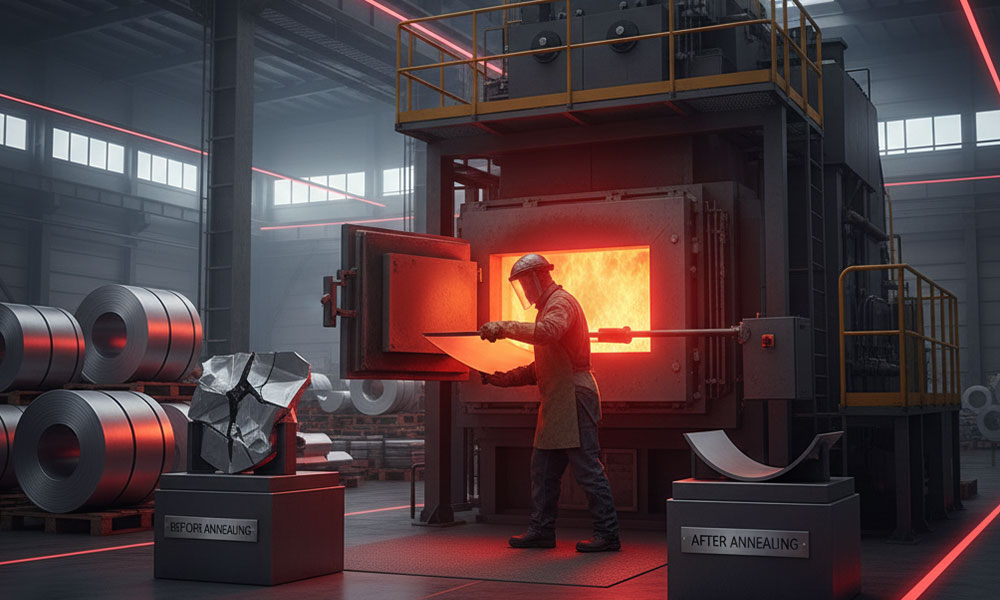
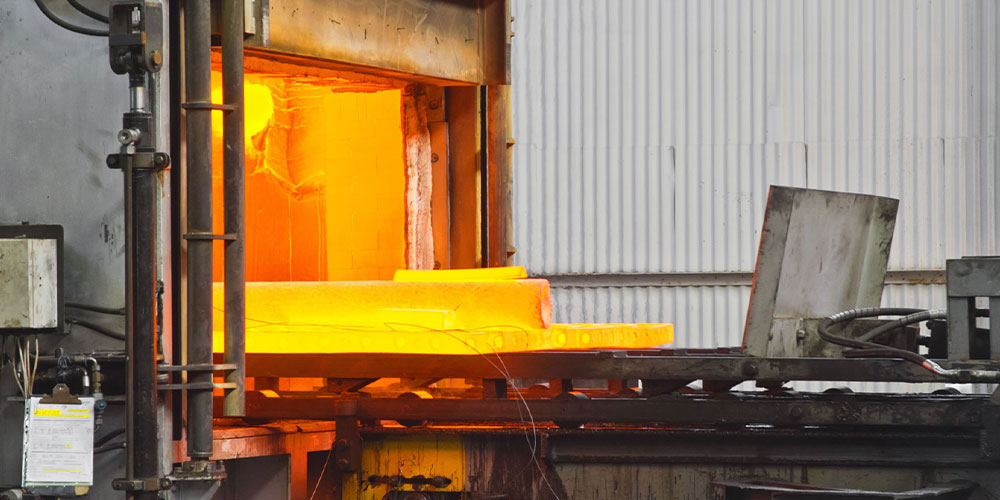
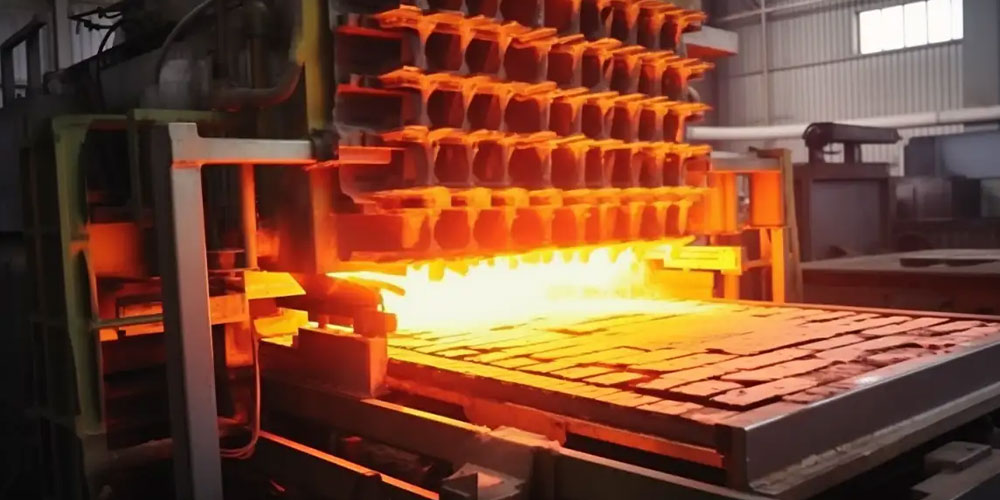
Aluminum annealing is a heat treatment process that involves heating the material to a specified temperature range, holding it at that temperature (soaking), and then cooling it under controlled conditions. The primary objectives of this process are to eliminate the effects of work hardening, reduce dislocation density, and promote grain recrystallization.
As a result of these changes, the modulus of elasticity remains largely unchanged; however, tensile strength decreases while ductility increases, which is essential for subsequent rolling or forming operations. By activating atomic diffusion mechanisms, aluminum annealing allows grain boundaries to reorganize and form a more uniform microstructure. This directly enhances the mechanical uniformity of the aluminum sheet.
In practice, the key process parameters include the annealing temperature (depending on the alloy), soaking time, cooling rate, and the surface condition prior to annealing. For example, some commercial aluminum alloys require annealing within a temperature range of approximately 200–400°C, while others require higher temperatures. The precise selection of these parameters depends on the alloy specification and the intended production objective, such as improving softness, enhancing ductility, or relieving residual stresses. Careful control of these parameters helps prevent defects such as excessive grain growth or the formation of undesirable phases.
How Annealing Affects the Mechanical Properties of Aluminum Sheets
The primary effect of aluminum annealing is the reduction of hardness and the improvement of formability. This enables aluminum sheets that have been hardened through cold rolling or previous cold working to be more easily prepared for subsequent operations such as stamping or bending. The reduction in dislocation density and the recrystallization of grains promote a more uniform distribution of tensile stress across the sheet, preventing localized stress concentrations. Therefore, the effect of annealing on the mechanical properties of aluminum sheets is reflected not only in stress–strain curves but also in their forming behavior and suitability for subsequent manufacturing processes.
From the perspective of mechanical testing, annealing typically results in a reduction in ultimate tensile strength and yield strength, while the percentage of elongation increases. These changes are of great importance to design engineers and manufacturers, as they indicate the extent to which the aluminum sheet can be stretched or formed while maintaining dimensional stability after annealing. Evaluating these property changes using standardized test specimens (e.g., according to relevant ASTM or ISO standards) is an essential part of the quality control process.
Types of Aluminum Annealing and Selecting the Appropriate Method for Industrial Aluminum Sheets
There are several types of aluminum annealing, each selected based on the intended purpose, such as stress relief, full annealing, or residual stress reduction:
- Full Annealing: The material is heated above the recrystallization temperature to allow complete recrystallization and the formation of a new grain structure.
- Partial Annealing (Subcritical Annealing): Performed to adjust the mechanical properties without causing excessive grain growth or complete recrystallization.
- Stress-Relief Annealing: Typically performed at lower temperatures to eliminate residual internal stresses while causing minimal changes to the material’s mechanical properties.
The selection of the appropriate annealing method depends on the alloy composition, sheet thickness, the material’s processing history (such as cold rolling, stretching, or welding), and the intended end-use application (for example, aerospace versus packaging industries). For instance, aluminum sheets intended for deep drawing after annealing may require full annealing with carefully controlled grain growth to prevent cracking caused by excessive deformation during the forming process.
The Effect of Annealing on Microstructure, Corrosion Resistance, and Surface Properties
By refining the grain structure and regulating phase distribution, aluminum annealing can also indirectly influence corrosion behavior. Changes in grain size and grain uniformity may alter the surface’s electrochemical characteristics, thereby reducing or increasing the rate of galvanic or localized corrosion. Consequently, the design of the annealing process should be aligned with the environmental and chemical conditions of the intended application. This consideration is particularly important for aluminum sheets used in outdoor or industrial environments where they are exposed to moisture and contaminants.
From a surface quality perspective, proper aluminum annealing can eliminate residual surface stresses, improving the performance of subsequent processes such as painting, coating, and welding by enhancing coating adhesion and joint quality. However, improper annealing—such as excessively rapid cooling or heating beyond the recommended temperature range—may lead to surface oxidation or other undesirable changes, making additional surface treatment necessary before further processing.
Quality Testing of Aluminum Sheets After Annealing
To ensure that the aluminum annealing process has achieved the desired effects on the sheet and that the impact of annealing on the mechanical properties of the aluminum sheet is beneficial, a series of quality tests is required. Common evaluations include hardness testing (e.g., Vickers or, for certain alloys, Rockwell), tensile testing to measure yield strength, tensile strength, and percentage elongation, optical or electron microscopy to examine grain size and microstructure, and non-destructive testing (NDT) to detect residual stresses or internal defects. Together, these tests determine whether the effects of annealing on the aluminum sheet meet the required specifications or whether adjustments to the annealing process parameters are necessary.
Case-Specific Considerations (Warnings and Rejection Criteria):
- An excessive reduction in strength without a proportional increase in ductility → indicates excessive grain growth (over-annealing).
- Non-uniform distribution of mechanical properties across the length and width of the sheet → indicates uneven temperature distribution or inconsistent soaking time during the annealing process.
- Signs of surface oxidation or discoloration → indicate the need for better furnace atmosphere control or improved surface protection during the annealing process.
Reputable manufacturers with in-house metallurgical laboratories document the results of these quality tests after each aluminum annealing batch and provide them to customers to ensure full traceability and process reproducibility. For example, Tolou Nourd Pars utilizes laboratory testing and metallographic analysis equipment to monitor product quality and can provide detailed test reports with each order upon request.
Rolling Processes and Their Relationship with Annealing (Rolling Operations, Aluminum Feedstock, and Rolling Services)
In aluminum sheet manufacturing, the combination of hot and cold rolling with annealing forms a production cycle that determines the final product quality. Rolling operations increase the material’s hardness and generate a high density of crystal lattice dislocations, which can adversely affect subsequent forming processes. Aluminum annealing is therefore used to “reset” the material by relieving work hardening and restoring its formability before final processing. For this reason, reputable aluminum sheet manufacturers typically provide rolling and annealing services as integrated, closely controlled processes to ensure that the finished product meets precise customer specifications.
- Business Insight: When purchasing aluminum sheets or aluminum discs, choosing a supplier that provides integrated rolling, annealing, and quality control services helps reduce production risks and save time. Companies such as Tolou Nourd Pars offer not only aluminum sheets and aluminum discs but also industrial rolling services. This integrated service package enables customers to receive products with consistent quality that fully comply with their specified requirements.
- Production Line Considerations: Precise control of the annealing temperature and post-annealing cooling rate, proper coordination with rolling equipment to prevent the introduction of new residual stresses, and the performance of metallographic and mechanical tests after each processing stage are essential technical requirements for maintaining the quality and consistency of aluminum sheets.
Aluminum Annealing: Process Control and Operating Parameters for Achieving High Quality
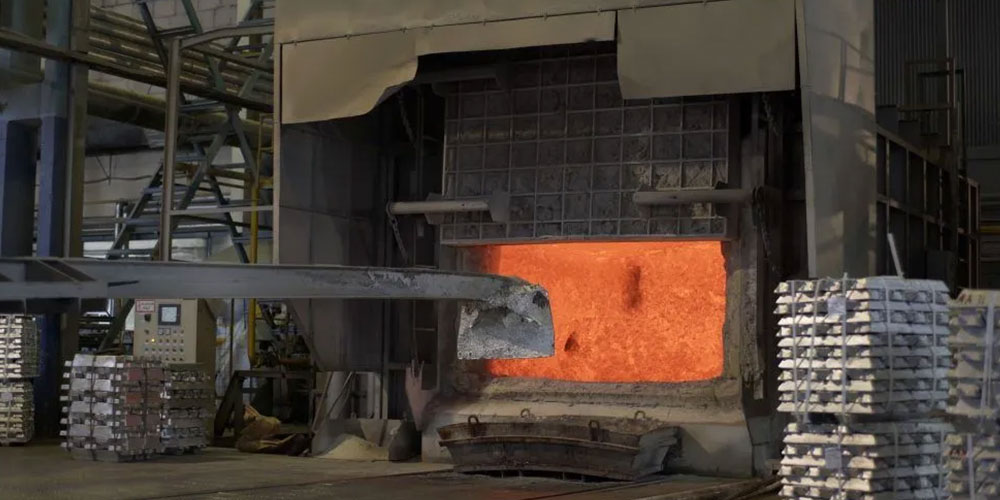
To produce industrial aluminum sheets with consistent and reliable properties, the following process parameters must be carefully controlled and standardized:
- Annealing furnace temperature profile (heat profile);
- Soaking time (soak time);
- Cooling rate and cooling environment (e.g., air, a reducing atmosphere, or a protective atmosphere);
- Surface preparation and cleaning prior to annealing to prevent contamination and minimize surface oxidation.
In addition, documenting all process parameters and maintaining records of sampling tests for each production batch are essential to ensure process repeatability and traceability. Practical experience has shown that even minor variations in the cooling rate or furnace temperature distribution can result in significant changes in the final mechanical properties of the material. Therefore, modern industrial production lines employ real-time monitoring and continuous process control of furnace parameters to ensure consistent product quality and uniformity throughout every batch.
Conclusion
Aluminum annealing is a critical process for optimizing the properties of aluminum sheets, directly influencing formability, stress distribution, and microstructural uniformity. By reducing hardness and improving ductility, aluminum annealing enables complex downstream manufacturing operations such as deep drawing, bending, and stamping. As a result, the impact of annealing on the mechanical properties of aluminum sheets is a key factor in determining the final product quality. Ultimately, the purpose of aluminum annealing is to establish the appropriate microstructural and mechanical conditions required for the intended application. To achieve consistent and reliable results, precise control of process parameters and comprehensive post-annealing quality testing are essential.
Tolou Nourd Pars is recognized as one of Iran’s leading companies in the metals industry, specializing in the production of high-quality aluminum sheets and aluminum discs. Leveraging advanced manufacturing equipment and a team of experienced professionals, the company supplies a diverse range of products for various industries, including automotive, component manufacturing, and pharmaceutical applications, such as aluminum sheets for the pharmaceutical industry. With a strong commitment to quality, technical expertise, and professional customer support, Tolou Nourd Pars has established itself as a reliable and trusted partner for its customers.