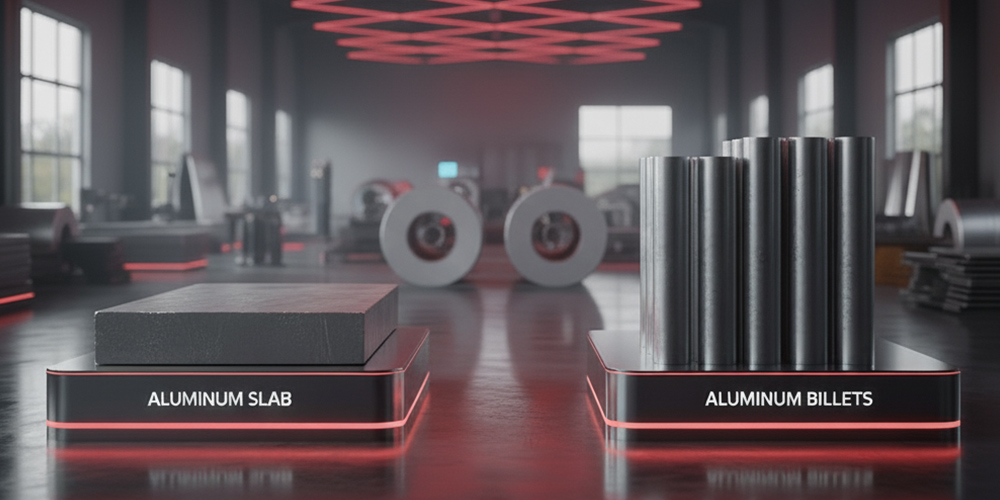
As one of the most vital metals, aluminum holds a distinct position across various industries, including aerospace, automotive, and construction. However, before being transformed into end products, aluminum exists in several semi-finished forms—the most crucial and practical of which are aluminum slabs and billets. Slabs and billets serve as essential foundations for manufacturing final aluminum products. Consequently, understanding the differences between aluminum slabs and billets and choosing between them has a direct impact on the efficiency of subsequent processing stages. The primary distinction between an aluminum slab and a billet lies in their shape, dimensions, and industrial applications. Aluminum slabs serve as the primary raw material in the rolling process to manufacture flat products.
Due to its thick, rectangular structure, the primary application of aluminum slabs lies in hot and cold rolling processes to create thin sheets and plates. In contrast, aluminum billets are engineered to manufacture complex longitudinal profiles and structural components. The application of aluminum billets is centered around extrusion and forging processes to produce tubes, profiles, and intricate parts for industries that require specialized shapes and high strength. In this article by the Nord Pars website, we introduce aluminum billets and slabs; join us until the end of this post to explore the differences between aluminum slabs and billets in greater detail.
Introduction to Primary Aluminum Products
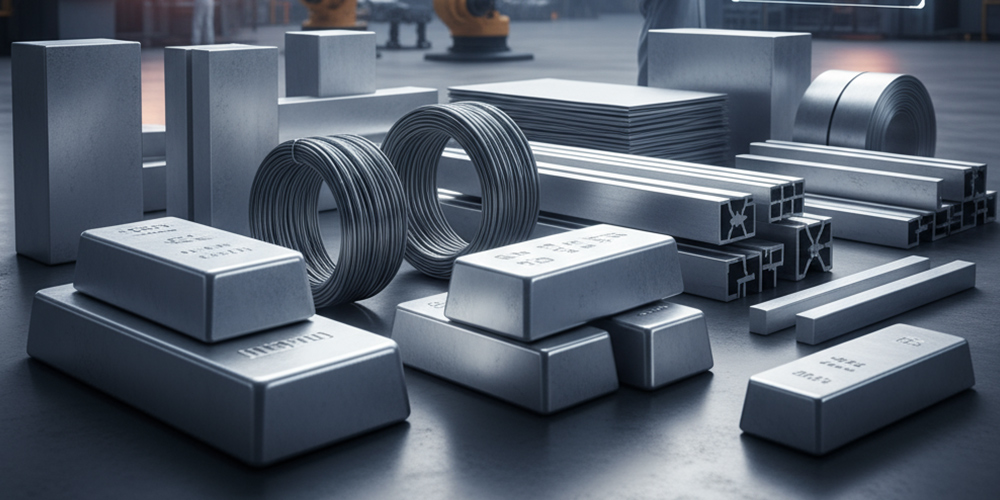
The production process of pure aluminum is complex and energy-intensive; once produced, it must be cast into standardized forms for industrial applications. This initial shaping, known as the aluminum casting process, yields primary or semi-finished products. These products then serve as the raw material feedstock for manufacturing plants, enabling them to produce final goods through mechanical processes such as rolling, extrusion, or forging. The primary classification of these raw aluminum products is based on their geometric shapes and dimensions. The four main groups of primary aluminum products are:
- Ingot)
- اسلب (Slab)
- Bilet
- بلوم (Bloom)
Ingots are produced in simple, molded shapes to be used for remelting or other casting processes. In contrast, slabs, billets, and blooms directly enter industrial production lines. The difference between aluminum slabs, billets, and blooms lies in their thickness and cross-sectional geometry. Slabs feature wide, rectangular cross-sections with significant thickness, whereas billets possess circular or square cross-sections characterized by long lengths and relatively smaller diameters or side dimensions.
Blooms are also similar to billets, but they feature larger dimensions. Choosing among these forms—considering the differences between aluminum slabs, billets, and blooms—depends entirely on the subsequent processing method. For instance, a product intended to be transformed into a thin sheet must start from a wide and thick slab, whereas an aluminum billet is used for products requiring long and narrow profiles.
What is an Aluminum Slab?
An aluminum slab is a semi-finished metal product with a large, thick, and wide rectangular shape. This specific geometry makes slabs a suitable raw material for producing flat products.
The thickness of slabs typically ranges from 200 to 600 mm, while their width can vary from 0.5 meters to over 2 meters. The length of aluminum slabs is also determined based on the casting capacity of the plant.
The difference between aluminum slabs and billets lies in their shape and applications.
Aluminum slabs are wide and are mainly used for flat rolling applications. The use of slabs in aluminum rolling also results in high surface quality due to their homogeneous structure.
In general, aluminum slabs are produced from various alloys such as 1100 or 3003 aluminum series, and their smooth surface makes subsequent processing easier.
Difference Between Aluminum Slabs and Billets: Aluminum Slab Production Process
The most common and advanced method for producing aluminum slabs is the Direct Chill (DC) casting process. This process is carried out with high precision and strict control to achieve a high-quality product.
First, molten aluminum with a precisely controlled and predetermined chemical composition is transferred from the melting furnace into a ladle. Then, the molten metal is slowly poured into a short mold made of copper or aluminum, equipped with a controlled water-cooling system.
After the molten aluminum comes into contact with the cold mold walls, a thin solid shell of aluminum is formed.
Then the lower block inside the mold moves downward, removing the semi-solid slab from the mold. Immediately after exiting the mold, cooling water is directly sprayed onto the surface of the slab. This water spraying significantly increases the cooling rate and leads to complete and uniform solidification of the molten metal along the entire length of the slab.
This process continues continuously until the slab reaches the desired length. After the casting process, slabs are cut into standard sizes. Precise control of molten metal temperature, casting speed, and cooling rate are key factors in determining the final microstructure, porosity, and mechanical properties of the slab.
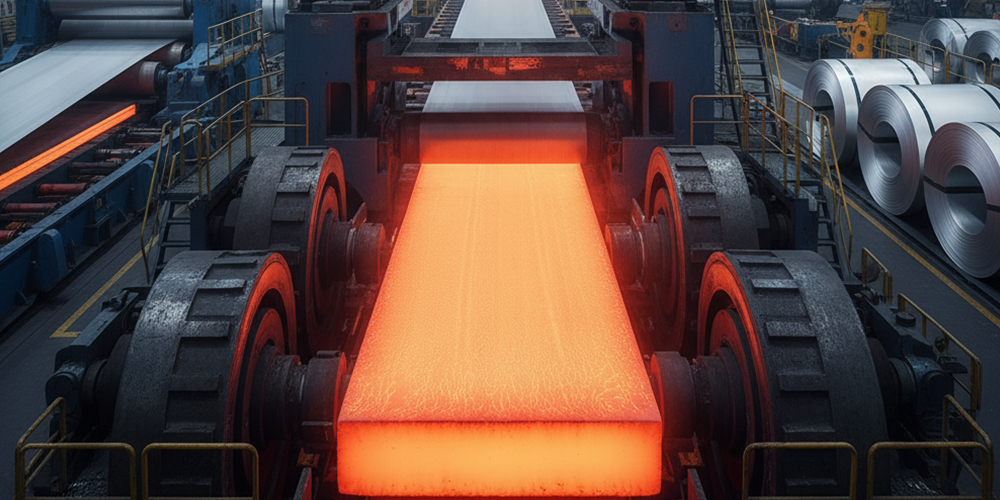
Application of Slabs in Aluminum Rolling; Hot and Cold Rolling Process of Slabs
Before examining the differences between aluminum slabs and billets, it is better to first become familiar with the production process of slabs.
The application of aluminum slabs in rolling is due to their rectangular structure, which makes them suitable for producing flat products and using them as the raw material for rolling lines. The use of slabs in aluminum rolling is divided into two main stages: hot rolling and cold rolling.
In the hot rolling process, the slab is first reheated in a furnace to a temperature of about 400 to 500°C to make it soft and malleable. The hot slab is then passed through a series of rotating rollers.
These rollers, using extremely high hydraulic pressure, gradually reduce the thickness of the aluminum slab while increasing its length, ultimately producing thick hot-rolled sheets. For thinner sheets, these coils then enter the cold rolling stage. In this process, the sheet is passed through high-precision rollers at room temperature without the application of heat, reducing it to very low thicknesses. Cold rolling not only reduces thickness but also improves surface quality and increases strength and dimensional accuracy.
The main applications of slabs in aluminum rolling are as follows:
- Automotive Industry: Manufacturing aluminum sheets for lightweight vehicle bodies, doors, and hoods
- Packaging Industry: Manufacturing beverage can bodies and aluminum foil for packaging
- Construction Industry: Manufacturing durable facades and roofing systems
- Transportation Industry: Manufacturing aircraft fuselages, railway cars, and ship hulls
- Home Appliances: Manufacturing refrigerator, freezer, washing machine, and other appliance housings
What Is an Aluminum Billet?
An aluminum billet is a semi-finished product with a long cylindrical or square cross-section, and its shape is the most significant difference between an aluminum billet and an aluminum slab. Aluminum billets typically have diameters ranging from 90 mm to 300 mm.
A billet can be considered a solid metal log that is transformed into various complex shapes when subjected to high pressure during manufacturing processes. In general, surface quality is of critical importance, as any cracks, oxidation, or surface impurities can lead to defects in the final extruded or forged product during the aluminum extrusion and forging processes.
For this reason, aluminum billets must undergo a special heat treatment known as homogenization after the casting process. This step, which is another key difference between aluminum slabs and billets, involves holding the billet at a high temperature for several hours to dissolve alloy segregations within its microstructure. Homogenization improves the billet’s microstructure and enhances the final mechanical properties of the product.
Billets are also commonly manufactured from 6061 and 7075 aluminum alloys. Their smooth surface finish facilitates the extrusion process and contributes to the production of high-quality extruded products.
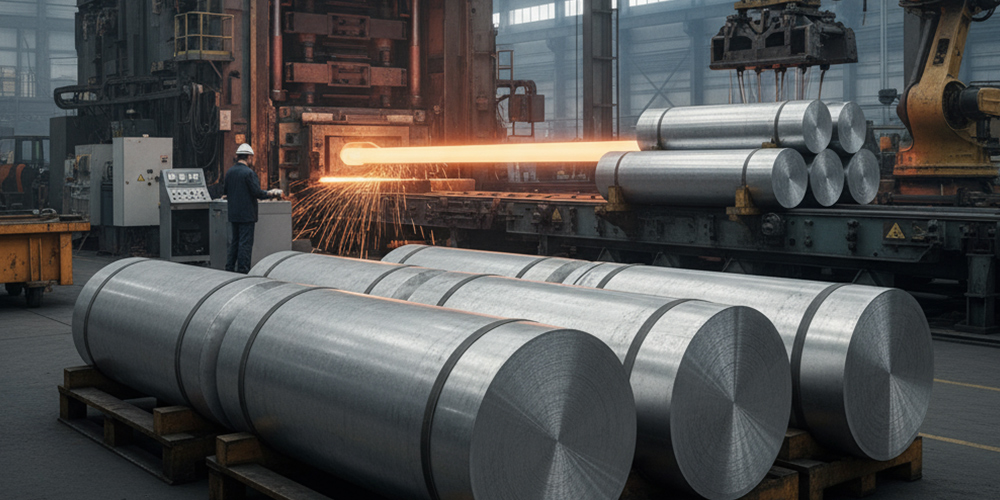
Technical Specifications of Aluminum Billets
The technical specifications of aluminum billets include their alloy composition, dimensions, surface quality, and other characteristics that determine their performance and suitability for subsequent manufacturing processes.
One of the most important specifications is the chemical composition, or alloy. Alloying elements such as copper, magnesium, silicon, zinc, and manganese are added to pure aluminum in controlled proportions to achieve the required properties, including strength, hardness, toughness, corrosion resistance, and weldability, depending on the intended application.
Surface quality is another critical parameter. The billet surface should be smooth, clean, and free from defects such as cracks, scaling, or severe oxidation, ensuring optimal performance during downstream processing.
Difference Between Aluminum Slabs and Billets: Applications of Aluminum Billets
The primary application of aluminum billets is as the raw material for the extrusion process used to manufacture structural profiles and tubes. Extrusion is a process in which a billet, preheated to a specific temperature in a furnace, is placed inside a container and forced through a die under extremely high pressure by a hydraulic ram. As the softened metal passes through the die, it forms a long, precise profile that is then cooled and, if required, heat-treated before being cut into standard lengths for various applications.
In addition to extrusion, aluminum billets are also widely used in the forging process.
Applications of Aluminum Billets:
- Manufacturing door and window profiles, curtain wall facades, and roof structures
- Manufacturing chassis, longitudinal beams, suspension systems, and interior components
- Manufacturing aircraft fuselage frames, wings, and structural components
- Manufacturing laptop chassis and electronic device components
- Production of roller conveyors, rails, and custom machinery components
Aluminum Alloys Suitable for Billets
Selecting the appropriate alloy for billet production has a direct impact on both its extrudability and the final properties of the finished product. Not all aluminum alloy series are suitable for extrusion. The use of different alloy series is one of the key differences between aluminum slabs and billets.
The most popular and widely used series for producing extrusion billets is the 6000 series. Alloys in this series, such as Aluminum 6061 and 6063, offer excellent extrudability and provide billets with the strength and mechanical properties required for a wide range of applications.
In addition, the 7000 series alloys are also well suited for billet production. Thanks to their zinc content, these alloys offer exceptionally high strength, making them ideal for aerospace and defense applications. The 2000 series aluminum alloys are also widely used for applications that require high strength and excellent machinability.
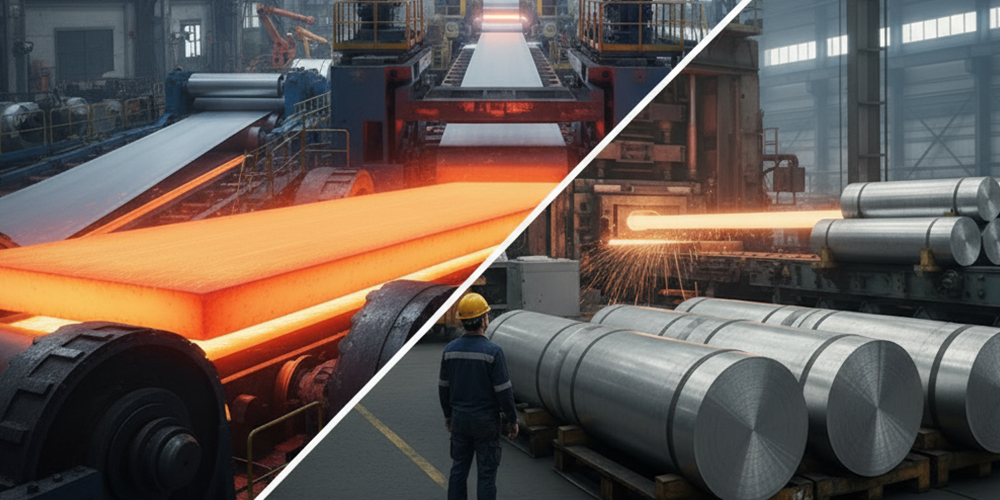
Comparison of Aluminum Slabs and Billets
The differences between aluminum slabs and billets lie in their shape, manufacturing process, alloys, and end-use applications. In general, the primary difference between an aluminum slab and a billet is their physical shape.
An aluminum slab is a wide, thick rectangular block, while an aluminum billet is a long cylindrical or square-section bar. Slabs are exclusively used as the feedstock for rolling mills to produce flat products such as sheets, plates, and foil. In contrast, billets serve as the primary raw material for extrusion and forging processes to manufacture long profiles and components with complex shapes. As a result, the commonly used aluminum alloys for each product are also different.
| Characteristics | Aluminum Slab | Aluminum Billet |
| Shape | Wide, thick rectangular shape | Slim cylindrical, circular, or square shape |
| Dimensions | Thickness: 200–600 mm | Diameter: 90–300 mm |
| Common alloys | 1000, 3000, and 5000 series | 6000 and 7000 series |
| Main applications | Production of sheets, plates, and foil. | Various structural profiles, and more. |
| Production process | Hot rolling and cold rolling | Forging and Extrusion |
Conclusion
Slabs and aluminum billets are two important semi-finished products in the aluminum industry, both produced from molten aluminum. However, the difference between aluminum slabs and billets lies in their shape and production process.
The application of slabs is mainly in aluminum rolling, serving as the main input material for producing sheets and flat plates used in industries such as automotive manufacturing, packaging, and construction. In contrast, aluminum billets are used to produce complex, high-strength profiles for industries such as construction, aerospace, and machinery manufacturing.
Generally, considering the differences between aluminum slabs and billets, neither has superiority over the other. The application of aluminum slabs in rolling and the use of aluminum billets are completely different and depend on the requirements and the final product.
Nourd Pars Company, with over four decades of experience in the aluminum rolling industry, is recognized as one of the pioneers in producing aluminum sheets and blanks. We at Nourd Pars produce thin aluminum sheets and our advantage lies in manufacturing aluminum blanks in two alloys, 1050 and 8011, in various dimensions and thicknesses.
For service requests and consultation, you can contact the experts at Nourd Pars through the Contact Us section.