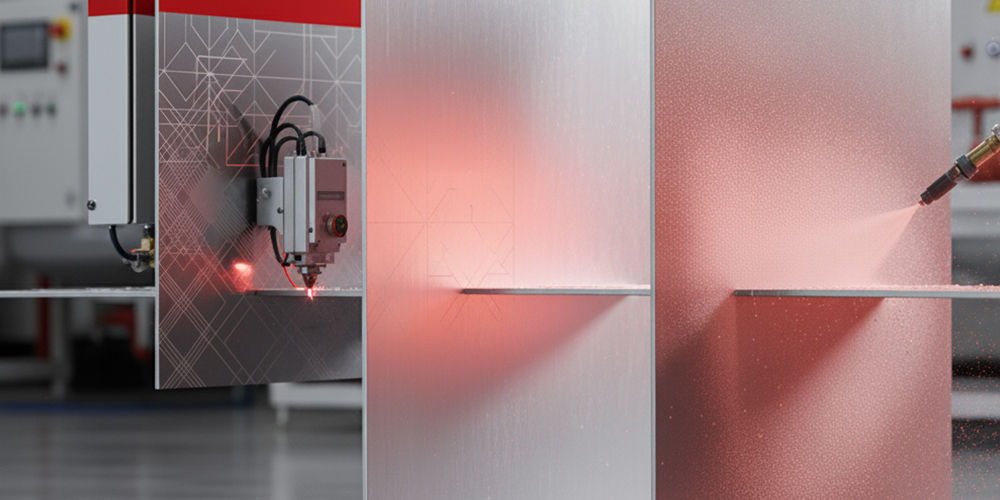
The purity of aluminum ingots is the most important factor in determining their performance in the production of specialized conductors and in improving the mechanical and chemical properties of this valuable metal. This key characteristic ensures that the final aluminum product achieves the desired strength, quality, and conductivity.
Several factors affect the quality of aluminum ingots, including the type of raw materials used, the melting process, and the control of impurities.
In addition, heat treatment and cooling operations during the process are also other factors affecting the quality of aluminum ingots. Various methods are used to evaluate the quality of this important aluminum product, serving as precise criteria for production process control. Spectroscopic analysis, microstructure examination, and density testing are among the aluminum ingot quality testing methods discussed in this article from Toloo Nard Pars Industrial Company. In addition, the purity of aluminum ingots is also examined in this study.
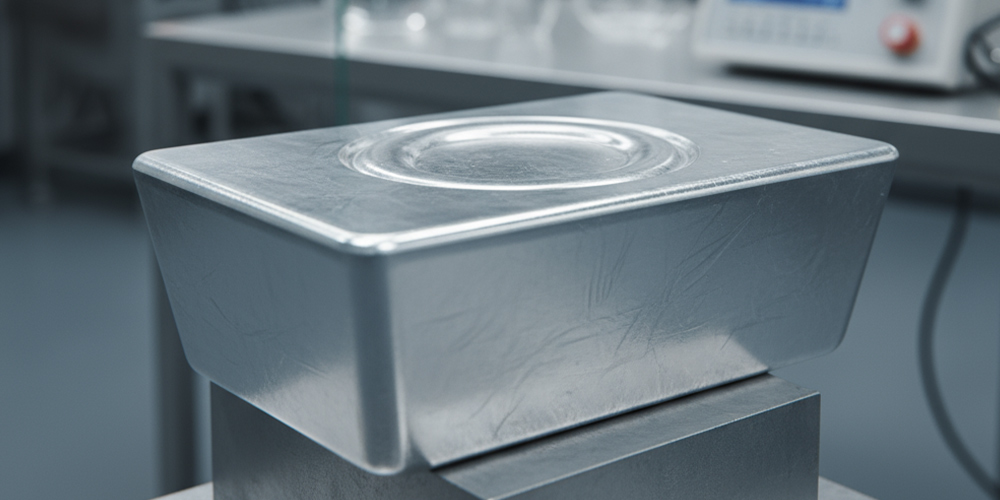
What is meant by the purity of aluminum ingots?
One of the characteristics of aluminum and aluminum ingots is their purity. The purity of aluminum ingots refers to the percentage of pure aluminum present in their chemical composition. In other words, in a high-purity aluminum ingot, the amount of elements such as iron, manganese, copper, silicon, etc., is lower. The higher the purity of aluminum, the greater its resistance to corrosion and the higher its electrical conductivity.
In alloy aluminum, the use of alloying elements such as magnesium, zinc, copper, etc., increases the metal’s strength but reduces its conductivity. For example, a purity grade of 99.7% means that out of 1000 grams of aluminum, 997 grams are pure aluminum, while the remaining 3 grams consist of other elements and impurities.
The presence of impurities, even in negligible amounts, affects the electrical and thermal conductivity of aluminum, reducing its efficiency for sensitive applications where conductivity is of paramount importance. Currently, the production of aluminum ingots in Iran is carried out by reputable companies with the highest quality.
Factors Affecting the Quality and Purity of Aluminum Ingots
The quality of aluminum ingots is influenced by numerous factors, with purity being one of the most critical. As previously mentioned, a higher purity level enhances both the mechanical properties and conductivity of the aluminum. Additionally, the quality of raw materials—namely alumina and bauxite—along with precise control over casting speed and conditions, melting temperature, and post-cooling heat treatments, all play a vital role in determining the final quality of the ingots. Below, we will examine the factors affecting aluminum ingot quality in greater detail.
1. Raw Materials
The quality of raw materials used in the smelting process is a fundamental and primary factor in determining the purity of aluminum ingots. The presence of impurities in the raw aluminum materials—namely bauxite or alumina—degrades the quality of the final product. To eliminate these impurities, the refining and purification of bauxite must be carried out in order to achieve aluminum with the highest degree of purity.
For this reason, selecting and purchasing high-grade, quality raw materials, as well as utilizing advanced equipment for refining and purification, is of great importance. At the end of the production phase, during the quality assurance stage, the purity level and overall quality of the final product are determined using aluminum ingot quality testing methods.
2. The Smelting and Melting Process
The second factor influencing the purity of aluminum ingots is the precise control of the melting process. At this stage, temperature, melting time, and chemical composition must be under strict supervision and control. For instance, raising the melting temperature beyond the standard limit can increase oxidation, ultimately reducing the purity of the aluminum ingots. On the other hand, temperatures below the standard level can lead to incomplete melting and an asymmetrical (non-uniform) distribution of elements across different types of aluminum alloys.
Given the importance of achieving a product with the highest quality, advanced equipment such as modern gas or induction furnaces must be utilized during the melting process. Additionally, fluxes are used for deoxidation and the removal of impurities. Paying close attention to the factors affecting the quality of aluminum ingots at all production stages will deliver a product with the finest characteristics and performance.
3. Aluminum Ingot Purity: Heat Treatment
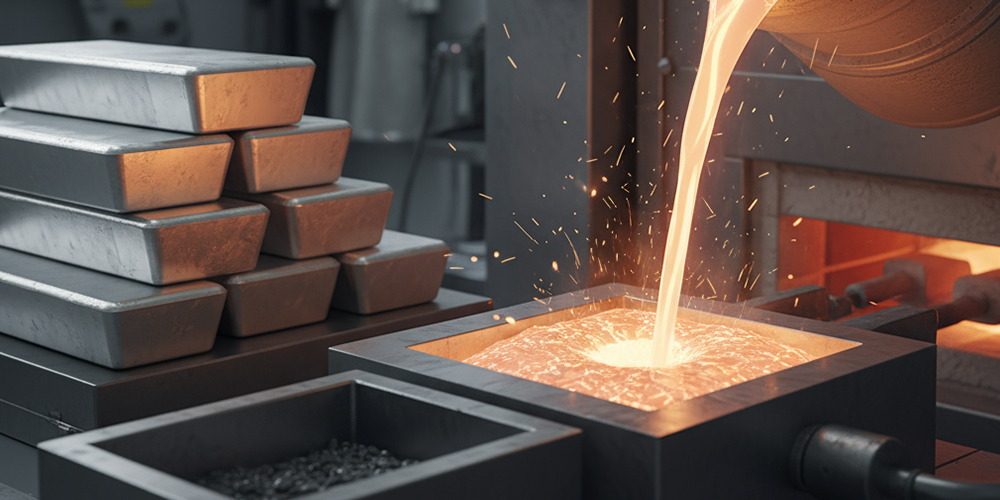
In the aluminum ingot production process, the applied heat must be fully controlled, and the internal stress of the metal should be reduced by precisely regulating the melting temperature of the aluminum and the heating time. This process improves the crystalline structure of the aluminum ingots. By utilizing the homogenization process at this stage, the purity [structural uniformity] of the aluminum ingot is enhanced, playing an effective role in increasing conductivity and ensuring a uniform chemical composition throughout the ingots.
Through controlled heat treatment, remaining gas bubbles are eliminated, and the metal’s density is increased. Heat treatment is also a contributing factor to the quality of aluminum ingots, which can only be achieved through the precise control of the operation.
4. Molding and Cooling (Casting and Solidification)
Another crucial factor influencing the purity [structural integrity] of aluminum ingots is the casting and cooling operation, which plays a decisive role in the crystalline structure and mechanical properties of the product. When the cooling process is slower than the standard rate, the grains become coarser, which reduces the ingot’s purity [structural quality]. On the other hand, a cooling rate that is too fast increases the likelihood of thermal stress and cracking.
In addition to the cooling operation, the mold temperature must be precisely regulated, and standard lubricants must be utilized. By observing these important points, heat is distributed uniformly, resulting in an integrated and homogeneous structure within the ingot.
Aluminum Ingot Purity: Inspection of Aluminum Ingots
Aluminum alloy ingots are inspected based on RPT (Reduced Pressure Test) principles, and solutions are proposed to reduce variability and improve the detection of potential defects. The RPT steps include:
- Sample Extraction: To determine the purity level of the aluminum ingot, a section from the center of the ingot is cut as a sample; specifically, from the area where defects such as double-layers [bifolds/folds] tend to concentrate. This section is considered representative of the overall quality of the ingot.
- Sample Preparation: To ensure the precise placement of the sample within the RPT mold, the sample must be machined. This process must be executed with high precision, ensuring that no defects are introduced into the sample.
- Melting in the RPT Mold: The prepared sample is melted inside the RPT mold under controlled conditions. This process minimizes the risk of contamination and ensures that the sample is completely molten.
- Vacuum Solidification: This is another method for testing the quality of aluminum ingots during
- Vacuum Solidification: In the RPT process, solidification takes place in a vacuum environment at a pressure of 0.1 atmospheres. At this stage, any potential defects within the ingot are identified so that the purity [quality] of the aluminum ingot can be enhanced through subsequent operations.
- Surface Preparation: After solidification, the sample is ground and polished. This stage prepares the sample for the analysis process and is highly crucial for the accurate detection of defects.
- Image Scanning and Analysis: In the next step of the aluminum ingot inspection, the prepared sample surface is scanned using high-resolution imaging techniques. Utilizing advanced image analysis software, the size, quantity, and distribution of potential defects are determined.
- Quality Inspection: The final stage is the evaluation of the aluminum ingot’s quality and purity based on the data collected in the previous steps. Crucial criteria in this section include the bifold index [double-layer index], pore density, and pore volume fraction to achieve a comprehensive assessment of the aluminum ingot’s quality.

Aluminum Ingot Quality Testing Methods
In addition to aluminum ingot inspection using the RPT method, there are other methods to determine the purity of aluminum ingots. Some of the most important aluminum ingot quality testing methods include:
- Density Testing
- Electrical Conductivity Testing
- Hardness Testing
- Ultrasonic Testing for Detecting Internal Cracks
- Optical Microscopy for Microstructural Evaluation
- Optical Emission Spectroscopy (OES) test for analyzing the chemical composition of aluminum
By carefully controlling all factors affecting the quality of aluminum ingots, it is possible to produce a product with high purity and the desired mechanical and chemical properties. Aluminum ingot production industries, by using quality testing methods, can identify any damage, defects, or contamination in the early stages and correct them. As a result, the purity of aluminum ingots reaches its highest level.
Toloo Nard Pars Company, a pioneer in the aluminum industry
Industry of aluminum is one of the most important industries in any country, playing a key role in supplying aluminum for various industrial sectors. Toloo Nard Pars Company is one of the most reputable and leading industrial companies in the production of aluminum sheets and billets, and over more than four decades of continuous and successful activity, it has played an important role in meeting customer demands. High-purity aluminum ingots and products with world-class quality and reasonable prices have made Toloo Nard Pars a trusted reference for aluminum-consuming industries.
Conclusion
The purity of aluminum ingots is one of the key factors in determining aluminum quality, and the higher the purity, the greater the electrical conductivity of aluminum. To achieve a product with the highest level of quality and purity, several important factors must be carefully controlled, such as the quality of raw materials, control of the melting process, and precise management of cooling and casting stages. In addition, controlling the applied heat and accurately adjusting temperature and heating time are other important factors affecting the quality of aluminum ingots.
In the stages of product quality assessment, various methods are used. Density testing, electrical conductivity evaluation, hardness testing, and optical emission spectroscopy (OES) for chemical element analysis are some of the methods used to test the quality of aluminum ingots.
Toloo Nard Pars Company is one of the reputable and long-established brands in the production of aluminum billets and sheets, and it uses the latest technology and advanced equipment in its manufacturing process. For more information, purchasing products, or contacting the company’s experts, you can use the Contact Us section.