Aluminum alloys are known as one of the most widely used lightweight metals, offering a wide range of properties through the combination of different elements. The most important difference between aluminum alloy series 1000 to 7000—classified according to the Aluminum Association naming system—lies in their primary alloying elements. These series range from nearly pure aluminum in the 1000 series to advanced zinc-based alloys in the 7000 series, each designed for specific industrial applications. The properties of aluminum alloys, such as strength, corrosion resistance, and formability, are directly influenced by their chemical composition and heat treatment processes.
For example, the 1000 series, due to its high purity, has excellent electrical conductivity; however, in contrast, the 7000 series, with its high strength, is a more suitable option for aerospace applications. This diversity has made aluminum alloys a highly flexible choice for various industries. The application of aluminum alloys across industries—from aircraft body manufacturing to food packaging—demonstrates their importance in technological advancement. To learn more about these alloys and the differences between aluminum alloy series 1000 to 7000, stay with us until the end of this article on the Nourd Pars website.

Introduction to aluminum alloys and their importance in industry.
Aluminum alloys, which are formed by combining aluminum with elements such as copper, magnesium, and zinc, are considered the backbone of modern industries. The 1000 to 7000 series naming system, based on the dominant alloying element, allows for quick identification of their properties. The 1000 series consists of pure aluminum, while higher series incorporate additional elements to enhance strength and durability. This classification system, standardized since the 1950s, enables engineers to make selection decisions based on specific requirements such as low weight or thermal resistance.
The importance of aluminum alloys in industry mainly lies in the intrinsic properties of each alloy, such as low density, which reduces structural weight, and high recyclability, which aligns with sustainability goals. In the automotive industry, the use of these alloys has reduced fuel consumption by up to 10%. The properties of aluminum alloys, such as oxidation resistance, also make them more suitable for corrosive environments. Overall, the differences between aluminum alloy series 1000 to 7000 lie in their behavior under heat and stress.
In the aerospace industry, every kilogram of weight saved results in thousands of liters of fuel savings, and these alloys also make up more than 70% of an aircraft’s structural body. The use of aluminum alloys in the electronics industry is also growing, where the excellent thermal conductivity of the 1000 series is especially important for cooling systems. The global aluminum industry, with an annual production of over 65 million tons, highlights the deep reliance on these materials. Understanding the differences between aluminum alloy series 1000 to 7000 is key to competitiveness in global markets.
To learn more, read the article What is the difference between aluminum sheets 1050, 8011, and 6061?
Properties of aluminum alloys
The properties of aluminum alloys—combining mechanical, chemical, and physical characteristics—make them highly versatile materials. Tensile strength, which can reach up to 500 MPa in the 7000 series compared to 90 MPa in the 1000 series, clearly demonstrates the effect of alloying elements. Corrosion resistance is particularly strong in the 5000 series due to magnesium, enabling use in marine environments where the natural protective oxide layer of aluminum is further enhanced. In addition, formability—one of the most important properties of aluminum alloys—is highly significant in processes such as extrusion and rolling. The 3000 series, alloyed with manganese, offers high flexibility for thin sheet applications.
In addition, the electrical and thermal conductivity of the 1000 series—close to copper (about 60% of copper’s conductivity)—makes it highly suitable for cables and heat exchangers. The difference between aluminum alloy series 1000 to 7000 in response to heat treatment is also significant, as the 2000 and 7000 series can double their strength through precipitation hardening. Physically, the low coefficient of thermal expansion (23 micrometers per degree Celsius) minimizes dimensional changes under varying temperatures.
The fatigue properties of aluminum alloys are also noteworthy. In advanced applications such as lithium-ion batteries, the surface conductivity properties of alloys play a key and very important role. Recent research shows that hybrid alloys, created by combining different series, can also optimize properties. This diversity gives engineers the opportunity to achieve a proper balance between strength, weight, and cost.
Applications of aluminum alloys in industry
Aluminum alloys, with their wide range of properties, are used in various industries and play a central role in industrial development and innovation. Their applications are based on characteristics such as low weight and high strength. Considering the differences between aluminum alloy series 1000 to 7000, in the aerospace industry, the 7000 series is used for aircraft wings and bodies to reduce weight and increase safety. In the automotive industry, the 6000 series is used for chassis and panels, helping to improve energy efficiency.
In addition, in packaging applications, the 3000 and 8000 series (similar to the 1000 series) are highly suitable and widely used for foils and beverage cans, as permeability resistance and recyclability are very important in this field. The marine industry also uses 5000 series aluminum alloys for ship hulls because this series can withstand corrosion in saltwater environments. Accordingly, the main applications of aluminum alloys, considering the differences between aluminum alloy series 1000 to 7000, are as follows:
- Aerospace: aircraft and missile bodies
- Automotive: chassis, wheels, and electric vehicle batteries.
- Construction: windows, curtain walls, and bridges.
- Packaging: cans, foil, and food containers.
- Marine: ship decks and diving equipment.
- Electronics: enclosures and connectors.
- Medical: prosthetics and imaging equipment.
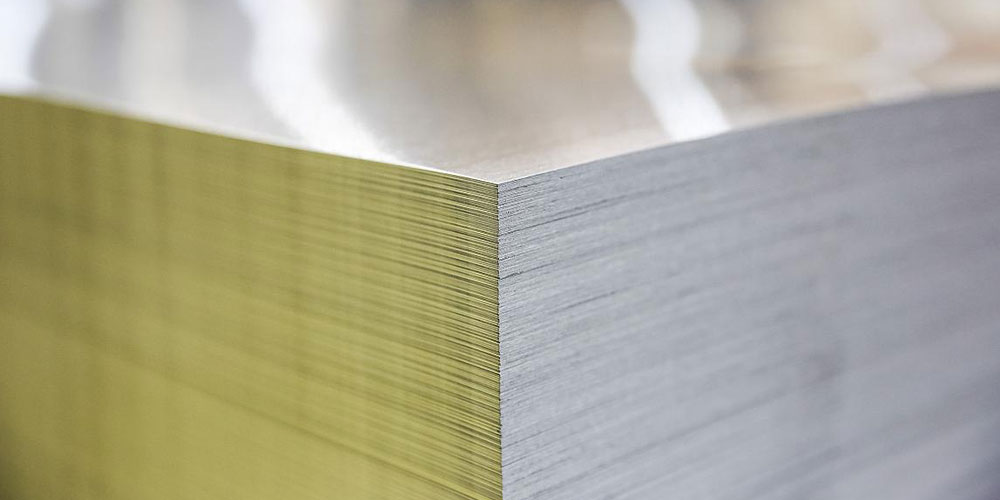
1.1000 series aluminum alloy (pure aluminum)
Aluminum alloy series 1000, which contains more than 99% pure aluminum, serves as a base for advanced alloys. The alloying elements are limited mainly to iron and silicon (less than 1%), which helps maintain its high purity. This series exhibits excellent formability through simple processes such as cold rolling and is suitable for applications where electrical conductivity is a priority. The properties of aluminum alloys in this series include low strength (around 50–100 MPa) but natural corrosion resistance, making it highly suitable for humid environments.
One of the most important differences between aluminum alloy series 1000 and 7000 is their lower sensitivity to heat. This series of aluminum alloys is widely used in electronic industries such as wiring and transformers, due to its conductivity of about 65% that of copper. In general, the 1000 series is easy to weld and machine, which helps reduce costs. Common alloys in the 1000 series, such as 1100 aluminum alloy, are used in thin sheets for insulation and packaging. However, its low strength makes it unsuitable for heavy loads; therefore, it is often reinforced with protective coatings.
2.Differences between aluminum alloy series 1000 to 7000: 2000 series aluminum alloy (Aluminum–Copper)
Aluminum alloys in the 2000 series, with copper as the main alloying element (3–6%), achieve high strength through precipitation hardening. Alloys such as 2024, with the addition of magnesium, offer a good balance between strength and toughness. This series is designed for stress-bearing applications, and its properties—such as excellent fatigue resistance—make it distinctive. A key difference between aluminum alloy series 1000 to 7000 in the 2000 series is its susceptibility to intergranular corrosion, which requires surface treatments such as anodizing. With tensile strength up to 450 MPa, it is suitable for structural components.
The 2014 aluminum alloy is used in aerospace industries, such as aircraft wings, due to its durability against vibration. Compared to the 1000 series and in the context of the differences between aluminum alloy series 1000 to 7000, its weldability is lower; however, its high machinability compensates for this limitation. In the military industry, the 2000 series is used for missile casings where both weight and strength are critical. Recent research has strengthened 2000 series alloys using nanocomposites, improving crack resistance. These advancements have also expanded the applications of this series of aluminum alloys into racing cars.
3.Aluminum alloy series 3000 (Aluminum–Manganese)
The 3000 series, which is alloyed with manganese (1–1.5%), has moderate strength and high formability. Alloy 3003 is the most common alloy in this series, and the addition of iron improves its corrosion resistance. The properties of aluminum alloys in this series include good work hardening without heat treatment, making it suitable for thin sheets. A key difference between aluminum alloy series 1000 to 7000 here is that it does not require complex heat treatment, as the 3000 series is strengthened through cold rolling.
This series is used in packaging industries, such as food cans, due to its durability and printability. Excellent weldability and low cost of the 3000 series aluminum alloys make mass production easier. This series is an economical option for everyday applications, and its main difference from higher series lies in its simplicity.
4.Aluminum alloy series 4000
The 4000 series aluminum alloys are combined with silicon (up to 13%), which gives them a low melting point and excellent castability. Alloy 4043 is commonly used as a filler material in welding. The properties of aluminum alloys in this series include high wear resistance, making them suitable for moving parts. The key difference between aluminum alloy series 1000 to 7000 in the 4000 series is its focus on melting and casting processes, as silicon increases the fluidity of the molten metal.
The 4000 series aluminum alloys are used in the automotive industry, such as in pistons, due to their heat resistance. The 4000 series is specialized in casting processes, and its difference from aluminum alloy series 1000 to 7000 is more evident in these specific applications.
5.Aluminum alloy series 5000 (Aluminum–Magnesium)
The 5000 series, alloyed with magnesium (0.5–5.5%), offers superior corrosion resistance and good strength. Alloy 5083, with chromium addition, is highly suitable for marine environments. The properties of this series of aluminum alloys include excellent work hardening, making it more appropriate for thick sheet applications.
The main difference between aluminum alloy series 1000 to 7000 is generally their resistance to environmental stresses, with the 5000 series being capable of withstanding seawater. Aluminum alloy 5052 is widely used in the marine industry, such as in tanks, due to its toughness. Considering the differences between aluminum alloy series 1000 to 7000, this series is a suitable choice for durability in harsh conditions.
6.Aluminum alloy series 6000 (Aluminum–Magnesium–Silicon)
The 6000 series is alloyed with magnesium and silicon (about 1% in total), which provides a good balance of strength and formability. Alloy 6061, the most widely used alloy in this series, can reach a tensile strength of around 310 MPa with T6 heat treatment. The properties of this series of aluminum alloys include moderate corrosion resistance and good machinability. A key difference between aluminum alloy series 1000 to 7000 is its dual precipitation hardening behavior. Among various alloys, the 6000 series is considered the most versatile aluminum alloy. One of the main reasons for the popularity of 6000 series grades is their excellent extrudability.
7.Aluminum alloy series 7000 (Aluminum–Zinc)
The 7000 series aluminum alloy, with zinc (5–8%), has the highest strength (up to 570 MPa). Alloy 7075, with copper and magnesium additions, is designed for aerospace applications. The properties of aluminum alloys in this series include high toughness but susceptibility to stress corrosion cracking (SCC). A key difference between aluminum alloy series 1000 to 7000 is its exceptional strength. Applications of the 7000 series in aerospace, such as landing gear, are due to its durability under high stress.
Differences between aluminum alloy series 1000 to 7000
The differences between aluminum alloy series 1000 to 7000 lie in their composition, properties, and applications. The 1000 series is pure and highly conductive, whereas the 7000 series is strong but more sensitive. In general, the properties of different aluminum alloy series guide material selection based on specific needs. The applications of aluminum alloys in industries, ranging from the conductivity of the 1000 series to the strength of the 7000 series, demonstrate this diversity.
| Series | Corrosion Resistance | Main Application | ||
| 1000 | Pure Aluminum (Al) | |||
| 2000 | Medium | Aerospace | |||
| 0 | ||||
| Silicon | ||||
| 5000 | Excellent | |||
| 6000 | 200–300 | Good | Structural | |
| 7000 | 400–570 | Poor (with coating) | Aerospace |
Conclusion
Analyzing the differences between the 1000 to 7000 series of aluminum alloys demonstrates that each series, with its unique properties, plays a distinct role across various industries. From the high conductivity of the 1000 series to the exceptional strength of the 7000 series, these alloys drive innovation throughout the industry.
Furthermore, to select the most suitable aluminum alloy, paying close attention to their specific material properties and industrial applications is of paramount importance, ultimately leading to smarter and more informed decision-making.
With over four decades of experience in the aluminum rolling industry, Nord Pars Company is recognized as a pioneer in manufacturing aluminum sheets and discs (circles) in Iran.
At Nord Pars, we specialize in producing thin-gauge aluminum discs. Our distinct competitive advantage lies in our capability to manufacture these aluminum discs using 1050 and 8011 alloys across a wide range of customized dimensions and thicknesses.
If you require a professional consultation or need further information, please reach out to the technical experts at Nord Pars through our “Contact Us” section.